
Reviewed · LUNCH EXPERIENCES
Dubai: Cultural Lunch at The Sheikh Mohammed Center
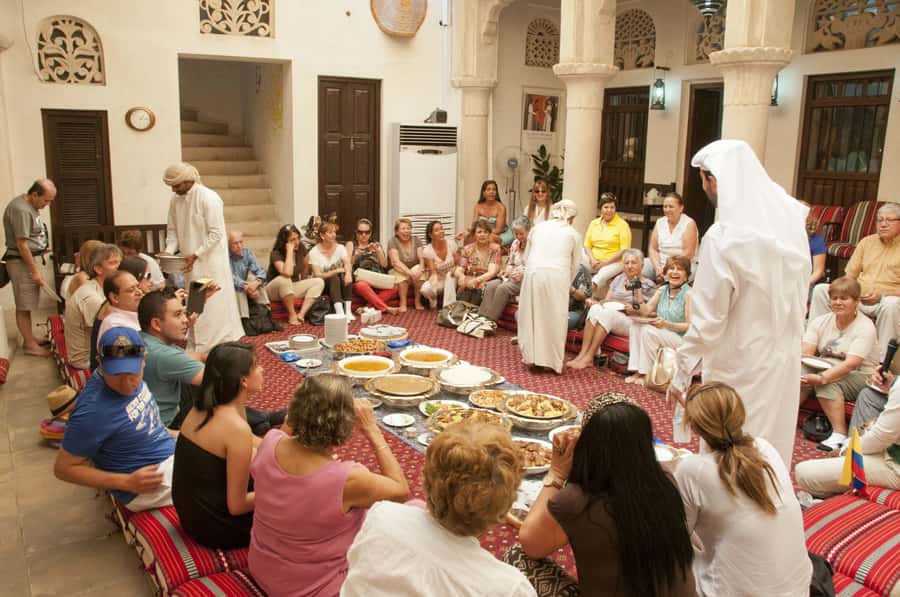
The best part of this Dubai experience is not the meal alone. It is the easy, open conversation that comes with it. You sit on cushions in a traditional wind tower house in Al Fahidi and learn why local customs matter, how Islam shapes daily values, and which questions are perfectly fine to ask. I like the relaxed setting and the chance to hear from an English-speaking host rather than simply look at old buildings.
I also like the traditional Emirati food, Arabic coffee, dates, and tea. Hosts such as Khaled, Nasser, Ruqaya, and Moeen Murad have been praised for their humor and clear explanations, though your host will vary. The main drawback is finding House 26, especially when construction or poor signs make the Al Fahidi lanes confusing. Arrive early and check the meeting point carefully.
- Lunch in a traditional wind tower house: Eat in the courtyard of SMCCU, in the Al Bastakiya area of Al Fahidi Historic District.
- Questions are part of the program: The format welcomes direct discussion about Emirati culture, Islam, customs, and everyday life.
- A useful first-day activity: It gives you cultural context before you visit mosques, museums, markets, or historic neighborhoods.
- A short 1.5-hour format: You get a focused introduction without giving up most of your sightseeing day.
- Food, coffee, dates, and tea included: The meal gives the conversation a practical, enjoyable center.
- Plan for the entrance: The meeting point is House 26 on Al Musallah Road, adjacent to the Ruler’s Court.
In This Review
- Why this lunch gives Dubai more context
- Arriving at House 26 in Al Fahidi
- Coffee, dates, and the first conversation
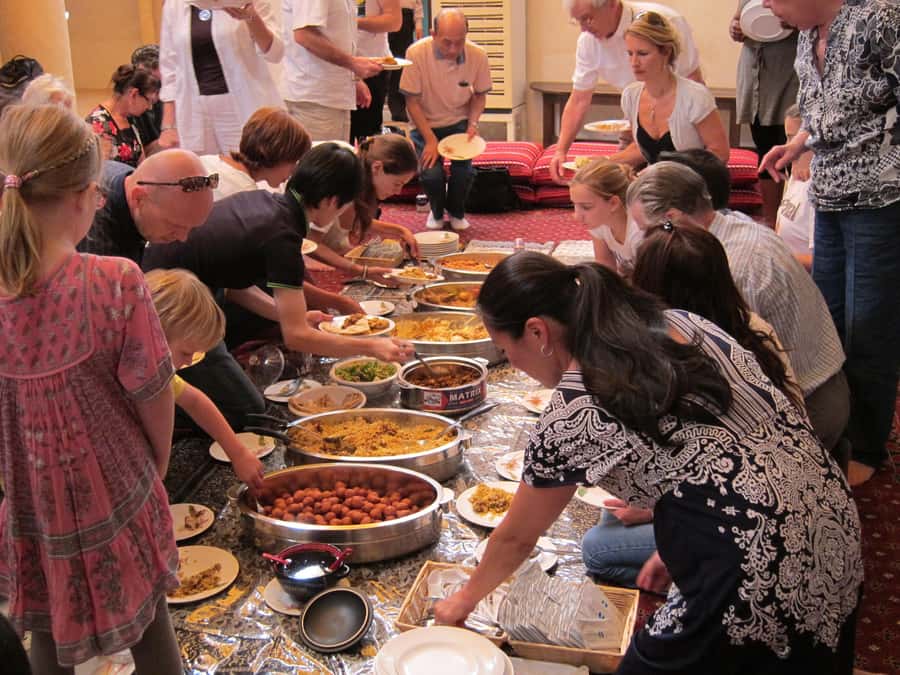
- What appears on the Emirati lunch table
- The real value is the question period
- How the Al Fahidi setting changes the meal
- Is $42 a fair price?
- Who will enjoy this most
- Practical details before you book
- Should you book the SMCCU cultural lunch?
- FAQ
- Where does the cultural lunch take place?
- What is the meeting point?
- How long does the activity last?
- What language is spoken?
- What food and drinks are included?
- Can I ask questions about Islam and Emirati customs?
- Is the activity wheelchair accessible?
- How much does the experience cost?
- Can I cancel for a refund?
- Can I reserve now and pay later?
Why this lunch gives Dubai more context
Dubai can make a first impression through skyscrapers, shopping centers, hotels, and polished attractions. Those places are part of the city, but they do not explain much about Emirati life. At SMCCU, the focus shifts to people, customs, religion, family values, hospitality, and the changes brought by modern Dubai.
That change of focus matters. You are not only looking at an old house or sampling a meal. You are given time to ask why local traditions work as they do. The program aims to improve communication between local people and international visitors, and the open question format is central to that goal.
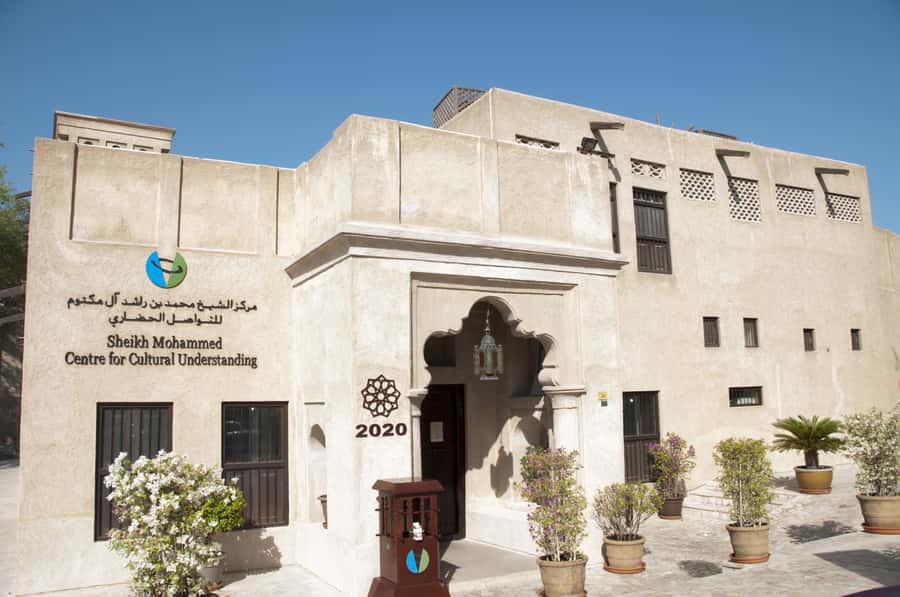
The setting helps. SMCCU occupies a traditional wind tower house in the Al Bastakiya trading village, within the Al Fahidi Historic District. The wind tower is an old cooling feature, designed to catch air and direct it through the house. You do not need a long architecture lecture to appreciate the courtyard and shaded seating, but the building gives the lunch a sense of place that a hotel restaurant cannot match.
I would treat this as a cultural orientation rather than a formal history lesson. You get a useful introduction to the United Arab Emirates, but not a full survey of every emirate or every period of the country’s past.
Arriving at House 26 in Al Fahidi
The official meeting point is House 26, Al Musallah Road, next to the Ruler’s Court. That sounds simple on paper. In practice, Al Fahidi’s narrow lanes, construction, and changing access points can make the entrance harder to spot than expected.
One useful tip is to allow extra time and look for the house number, not only a welcome sign. A sign at the wrong door can cause confusion, particularly if you arrive close to the start time. The area has had construction that blocked some streets and pathways, so your map route may not match the easiest walking route on the ground.
This is not a reason to skip the activity. It is a reason to avoid a last-minute arrival. If you are staying elsewhere in Dubai, build in time to reach Al Fahidi and then locate House 26. The SMCCU is wheelchair accessible, but the practical route through the historic district may still be worth checking in advance if you need step-free access at every point.
Once inside, the atmosphere becomes calmer. The traditional house and courtyard separate the experience from Dubai’s traffic and large-scale modern buildings. You sit on traditional floor cushions, so wear clothing that lets you sit comfortably.
A few more Dubai trips to weigh up
- Dubai: Abu Dhabi Trip with Lunch at Al Khayma Heritage Restaurant
★ 5.0 · 805 reviews - Dubai: Yacht Cruise with Swimming, Snorkeling and BBQ Lunch
★ 4.6 · 438 reviews - From Abu Dhabi: Explore Dubai with Optional Lunch
★ 4.3 · 400 reviews
Coffee, dates, and the first conversation
The meal begins with familiar Arabic hospitality: coffee, tea, and dates. Arabic coffee is often served in small amounts, so do not expect a large mug. The point is the ritual and the welcome, not caffeine by the gallon.
This opening also gives the host a natural way to explain greetings, expressions, and small points of etiquette. You may learn how people greet one another, what certain gestures mean, and why courtesy carries weight in Emirati society. These details are useful because they help you read other moments during your time in the UAE.
The tone is informal. You can ask about local customs and religious influence without needing to pretend you already understand them. The stated approach is Open Doors, Open Mind, and the format depends on people asking real questions rather than sitting through a one-way talk.
That makes your participation important. If you want a quiet meal with little discussion, this may feel more social than expected. If you are curious about subjects you would find difficult to raise in an ordinary setting, this is where the activity earns its price.
What appears on the Emirati lunch table
The lunch includes a selection of local Emirati dishes, along with dessert. The exact menu can vary, so you should think of it as a sampling of local food rather than a fixed restaurant order.
The food is served in a social setting, with the host explaining what you are eating and connecting it to local life. This adds meaning to dishes that might otherwise seem unfamiliar. You can focus on flavor, but you also get a chance to ask how meals fit into hospitality and family gatherings.
The meal has been praised for being delicious and traditional, though one account found the selection more Indian than expected. That is a useful point to keep in mind. Dubai’s food culture reflects its wide mix of communities, and a meal served in the UAE may not match a narrow idea of what Arabic food should be.
I like that you can concentrate on conversation instead of choosing from a large menu. The tradeoff is less control over individual dishes. If you have dietary restrictions, the supplied details do not explain how substitutions are handled, so contact the provider before booking rather than assuming the menu can be changed.
You may also be able to take leftover food away. That can be handy, though the packaging has included foil containers and plastic bags. If reducing single-use packaging matters to you, ask about the arrangement and consider bringing a reusable container if appropriate.
The real value is the question period
The strongest part of the activity is the chance to ask direct questions. Your host or hostess may discuss greetings, expressions, customs, local values, religion, and the meaning behind everyday practices. The conversation is not limited to a prepared speech, so each lunch can develop differently.
Previous hosts have included Khaled, Nasser, Ruqaya, and Moeen Murad. Their styles have been described as friendly, humorous, and clear. You should not book expecting one particular person, but these names give you a sense of the human approach the center can offer.
The question period is especially useful for subjects that are easy to misunderstand from the outside. You might want to ask about clothing, hospitality, prayer, family life, local sensitivities, or the difference between Emirati traditions and the wider mix of cultures found in Dubai. Ask politely and listen closely. The setting is relaxed, but respect still matters.
This is also a good place to sort out the difference between the United Arab Emirates as a country and Dubai as one emirate within it. The conversation centers on Emirati culture, not simply the international population living and working in Dubai. That distinction helps you understand why the city can feel both deeply local and highly global at the same time.
Do not expect a full personal connection with Emirati society after 90 minutes. The experience offers a door, not unlimited access. You leave with a better starting point and, ideally, more questions to carry into the rest of your trip.
Same city, a completely different pace:
- Dubai: Burj Khalifa Levels 124 & 125 Entry Ticket + Options
★ 4.3 · 90,891 reviews - Dubai: Desert Safari, Quad Bike, Camel Ride & Al Khayma Camp
★ 4.9 · 68,962 reviews - Dubai: Desert Safari, Quad Bike, Camel Ride and Sandboarding
★ 4.9 · 43,505 reviews - Dubai: Safari, Quad Bike, Camel Ride, and Buffet Dinner
★ 4.9 · 33,424 reviews
How the Al Fahidi setting changes the meal
Al Fahidi Historic District is one of the few parts of central Dubai where the built environment slows you down. The wind tower house, courtyard, and traditional seating make the lunch feel connected to the older trading village rather than placed in a generic dining room.
That setting is not just decoration. It gives you a physical example of how homes were adapted to heat before modern air conditioning. It also places the cultural program inside the historic quarter, so you can pair the lunch with a walk through the surrounding lanes.
Still, keep your expectations sensible. The supplied details identify the house and the historic district, but they do not promise a full guided tour of every building. The main activity is the lunch and discussion. Plan extra time before or after if you want to explore Al Fahidi at your own pace.
The best schedule is often an early cultural stop in your Dubai visit. Several people have found it useful on the first day because it gives later sightseeing more meaning. After hearing about local etiquette and values, you may notice details at markets, religious sites, and historic houses that you would otherwise pass over.
Is $42 a fair price?
At $42 per person, this is not the cheapest meal you can buy in Dubai. You could spend less on food alone. The price makes more sense when you count the setting, the organized cultural program, the host, the drinks, the traditional dishes, and the opportunity to ask questions.
I see it as a combined meal and orientation session. If you only want to eat, the value is weak. If you want cultural explanation delivered in a friendly format, the price is reasonable for a short, focused introduction.
The 1.5-hour duration is another part of the value. You get enough time for food and discussion, but not so much that it takes over your day. It fits well between visits in the Al Fahidi area and other Dubai plans.
The experience has a 4.6 rating from 138 reviews, and the strongest praise centers on the food, hospitality, relaxed conversation, and hosts who encourage questions. That pattern tells you what to prioritize when deciding: come for the human exchange and local context, with lunch as an important bonus.
Who will enjoy this most
I would recommend the lunch to first-time visitors who want a clearer idea of Emirati culture before rushing through Dubai’s major sights. It also suits couples, families, and solo visitors who enjoy conversation and do not mind sharing a meal in a group setting.
It is a good choice for anyone curious about Islam and its effect on local values, provided you approach the subject with genuine interest. The chance to ask questions makes it more useful than a passive museum visit.
Food-focused visitors will enjoy trying local dishes, coffee, dates, tea, and dessert, but you should not book solely for a guaranteed culinary menu. The selection can vary, and at least one account found the food closer to Indian flavors than expected.
This may not suit you if you want a private meal, a tightly fixed menu, or a long architectural tour. It is also not the best choice if you dislike floor seating or prefer an activity with no audience participation.
Practical details before you book
The host or greeter speaks English, and the listed language for the activity is English. Check the available starting times when booking because the duration is fixed at 1.5 hours but the start time can vary.
Cancellation is free up to 24 hours in advance for a full refund. You can also reserve now and pay later, which helps if your Dubai schedule is still changing.
The meeting point is House 26, Al Musallah Road, in Al Fahidi Historic District, adjacent to the Ruler’s Court. Because signs and access routes can be confusing, I would save the exact address, leave a time cushion, and avoid assuming that the first welcome sign you see is the correct entrance.
The program is wheelchair accessible. If you use a wheelchair, contact the provider ahead of time about the route through the historic district and the seating arrangement, since the activity uses traditional floor cushions.
Should you book the SMCCU cultural lunch?
Book it if you want Dubai to make more sense beyond its towers and shopping malls. The meal gives you traditional flavors, but the real reason to go is the open conversation about customs, religion, greetings, and daily values.
I would especially choose it near the start of a Dubai visit, when the information can shape everything that follows. Arrive early, expect a shared and informal setting, and bring questions. Skip it only if you want a private restaurant meal or a fixed culinary tour. For a short, human introduction to Emirati culture, $42 is a fair spend.
FAQ
Where does the cultural lunch take place?
It takes place at the Sheikh Mohammed Center for Cultural Understanding in a traditional wind tower house in the Al Bastakiya trading village of the Al Fahidi Historic District.
What is the meeting point?
Meet at House 26, Al Musallah Road, Al Fahidi Historic District, adjacent to the Ruler’s Court.
How long does the activity last?
The cultural lunch lasts 1.5 hours.
What language is spoken?
The host or greeter speaks English, and English is the listed language for the activity.
What food and drinks are included?
The lunch includes a selection of local Emirati dishes, dessert, Arabic coffee, tea, and dates.
Can I ask questions about Islam and Emirati customs?
Yes. The activity encourages you to ask questions about local culture, religion, customs, traditions, and everyday life.
Is the activity wheelchair accessible?
Yes, the activity is listed as wheelchair accessible.
How much does the experience cost?
The listed price is $42 per person.
Can I cancel for a refund?
You can cancel up to 24 hours in advance for a full refund.
Can I reserve now and pay later?
Yes. The activity offers a reserve-now, pay-later option.
Just added around Dubai
- Premium Desert safari With Dune buggy camel ride BBQ dinner★ 5.0 · 36 reviews
- Night City Tour of Dubai★ 4.5 · 14 reviews
- FLYBOARD 30mn session @ POPEYE JETSKI★ 5.0 · 80 reviews
- Dubai Sunrise / Morning private safari tour★ 5.0 · 18 reviews
- Sky Views Dubai with Options★ 4.5 · 17 reviews
- Full Day Hatta Mountain Tour from Dubai★ 5.0 · 23 reviews
- Explore Old Dubai Al fahidi District Museums Markets Abra★ 5.0 · 15 reviews
- Full Day Tour Exploring Abu Dhabi★ 5.0 · 13 reviews
Lunch Experiences, compared.
Abu Dhabi Trip with Lunch at Al Khayma Heritage Restaurant
Read our review →
Yacht Cruise with Swimming, Snorkeling and BBQ Lunch
Read our review →
Al Ain Full Day Trip from Abu Dhabi with Lunch
Read our review →
Abu Dhabi Sheikh zayed Mosque with Lunch, Louvre & Qasr Al Watan Palace
Read our review →
Burj Khalifa 125th Floor, Lunch or Dinner at Rooftop Burj Club
Read our review →Browse the lists this tour appears in