Reviewed · SAFARI
Dubai: Dubai Safari Park Entry Pass
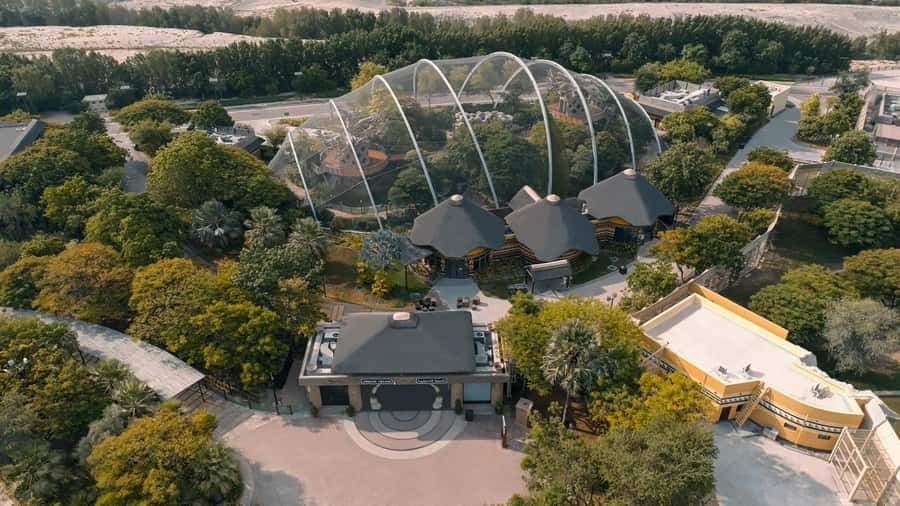
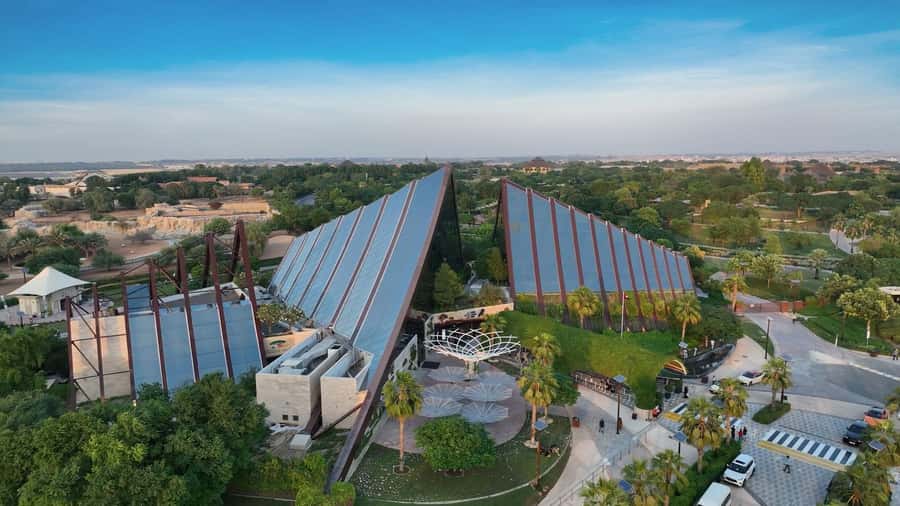
Dubai Safari Park gives you something unusual in Dubai: a full day with animals in broad, carefully designed habitats rather than a quick photo stop. The African Village, Arabian Desert Zone, Asian Village, and Explorer Village each feel different, and the park is large enough that you should plan several hours, not a rushed morning.
I like the low entry price of about $13 and the number of activities included, especially the animal presentations, talks, Young Explorers workshops, and some free feeding sessions. I also like the shade, misting fans, rest areas, and clean layout, which matter greatly in Dubai’s heat. The catch is size: walking between sections takes time, paid add-ons can increase the bill, and some animals may stay indoors during very hot weather.
In This Review
- Key points to know before you go
- What the $13 Dubai Safari Park ticket really gives you
- Allow a full morning for the 119-hectare park
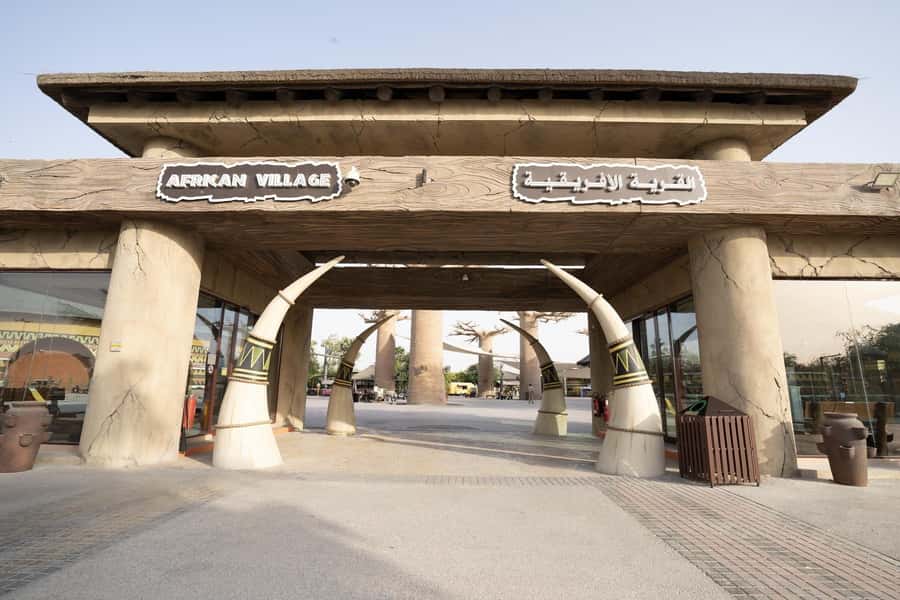
- African Village: the park’s biggest animal focus
- Arabian Desert Zone and the included safari
- Explorer Village: the best upgrade for close animal views
- Asian Village and the Asian Village Theatre
- Kids Farm and the Grand Aviary
- Heat, shade, and animal activity
- Food, rest areas, and practical comfort
- Getting to Al Warqa without a frustrating detour
- Is the Explorer bus or train worth paying for?
- Who will enjoy Dubai Safari Park most?
- Should you book Dubai Safari Park?
- FAQ
- How much does Dubai Safari Park entry cost?
- How long should I spend at Dubai Safari Park?
- Is the Arabian Desert safari included?
- Is the Explorer Safari Tour included?
- Is the train ride included?
- What free animal encounters are available?
- Can I feed giraffes at the park?
- Are children admitted for free?
- Can I bring food or drinks into the park?
- What items are not allowed at Dubai Safari Park?
Key points to know before you go
- About 3,000 animals live across African, Asian, Arabian, and farmyard settings.
- The 15-minute Arabian Desert safari is included, while the Explorer Safari bus and train require the option or an added fee.
- Allow at least four to six hours, and consider a full day if you want the talks, shows, feeding sessions, and every village.
- Free activities include selected feeding encounters, such as pony walking, duck feeding, and bird feeding.
- The park is far from central Dubai, so check your route carefully and allow extra time for transport.
- Book popular paid encounters early, especially giraffe feeding, which can fill for the entire day.
What the $13 Dubai Safari Park ticket really gives you
At roughly $13 per person, the basic ticket is strong value for Dubai. You are not paying only to enter a small collection of animal enclosures. The admission covers a large park, themed villages, three live animal presentations, wildlife talks, Young Explorers workshops, complimentary feeding or encounter activities based on the daily schedule, and a 15-minute safari in the Arabian Desert Zone.
That is a lot for the starting price. You will still need to pay extra for some encounters and possibly for transport options, but you can have a worthwhile day without buying every upgrade.
The park also offers free cancellation up to 24 hours before the visit and a reserve-now, pay-later option. Those details help if your Dubai plans are still shifting, though the more important decision is how much time you can give the park.
A few more Dubai trips to weigh up
- Dubai: Desert Safari, Quad Bike, Camel Ride & Al Khayma Camp
★ 4.9 · 68,962 reviews - Dubai: Desert Safari, Quad Bike, Camel Ride and Sandboarding
★ 4.9 · 43,505 reviews - Dubai: Safari, Quad Bike, Camel Ride, and Buffet Dinner
★ 4.9 · 33,424 reviews
Allow a full morning for the 119-hectare park
Dubai Safari Park covers 119 hectares in Al Warqa, so do not treat it as a quick stop between other central Dubai sights. You can walk between areas, but the distances and heat make a planned route much easier.
I would aim to arrive early, around 9:00 or 10:00 when opening hours allow. Several hours gives you time to move at a comfortable pace, stop for food, watch presentations, and wait for animals to appear. Some sections may close to new entry before the official closing time, and last admission is 90 minutes before closing.
The park has shaded seating, cooling fans, and misting systems. These features received strong praise for good reason. On a hot day, they can turn a tiring walk into a manageable one. Still, shade does not remove the heat, so bring water, wear sensible shoes, and avoid planning the entire visit around the hottest part of the afternoon.
During Ramadan, the stated hours are 10:00 AM to 6:00 PM, with final entry at 5:00 PM for every ticket type. Check the official opening hours and the day’s presentation and feeding timetable before setting out.
African Village: the park’s biggest animal focus
The African Village is one of the main reasons to visit. It presents animals associated with the African savannah, including both large and small land mammals, within spacious settings designed to resemble their native surroundings.
The size of the grounds is a real advantage. Animals have room to move and hide, which feels more natural than seeing them packed into tiny displays. It also means you may not see every animal immediately. Patience helps, and staff can sometimes point out animals that are easy to miss.
The Explorer bus is particularly useful here. It takes you close to animals while saving your legs, and the guide adds context as you go. One practical criticism is that the bus may not stop long enough for photographs in the African Village, so keep your camera ready and listen for the guide’s instructions.
If your main goal is to see as many animals as possible, I would choose the Explorer option rather than relying only on walking. Several sections are large, and animals with plenty of space are not always positioned beside the path.
Arabian Desert Zone and the included safari
The Arabian Desert Zone connects the park to the region around you. It is also where the included 15-minute safari takes place, making it an important part of the base ticket.
Do not confuse this with a separate Dubai desert excursion involving dune driving. This is a short wildlife ride inside the park, focused on animals and their surroundings. It is a gentle, educational part of the day rather than an adrenaline activity.
The setting gives you a chance to see how the park presents regional wildlife alongside animals from other parts of the world. It is a useful contrast with the African and Asian villages, and it keeps the visit from feeling like a single repeated zoo route.
The short length means you should not buy the basic ticket expecting a long safari drive. The value comes from the complete day, with the Arabian ride acting as one part of a larger visit.
Same city, a completely different pace:
- Dubai: Burj Khalifa Levels 124 & 125 Entry Ticket + Options
★ 4.3 · 90,891 reviews - Dubai: Red Dune Safari, Quad Bike, Camel Ride, BBQ Dinner
★ 4.9 · 32,185 reviews - Dubai: Premium Safari, Camel Ride & Al Khayma Camp 3-Buffets
★ 4.9 · 30,335 reviews - Dubai: Burj Khalifa Sky Level 148, 124, & 125 Entry Ticket
★ 4.6 · 23,827 reviews
Explorer Village: the best upgrade for close animal views
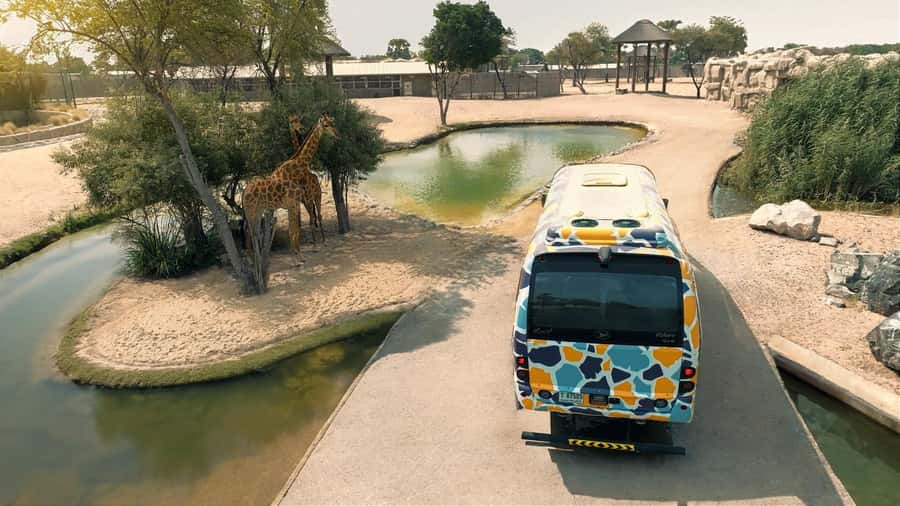
The Explorer Safari Tour is the most useful add-on for many people. You board a bus and travel through animal areas from a closer viewing position, with a guide explaining what you are seeing.
This matters because the park’s scale can work against you. Walking lets you set your own pace, but it also takes longer, and animals may be far from the path. The bus gives you a better chance of seeing animals without spending all your energy crossing the site.
Guides are a major part of the experience. Glen was singled out for being friendly and well informed, while other visitors praised guides in the Asian Village and mentioned Flyvian by name. Staff also help point out animals hiding in the background, which can make a real difference in large enclosures.
The trade-off is cost and timing. Explorer access may be included only with a selected ticket option, and some transport or special encounters cost extra. Check exactly what your chosen ticket contains before paying, since the inexpensive entry ticket and the more transport-heavy packages are not the same product.
Asian Village and the Asian Village Theatre
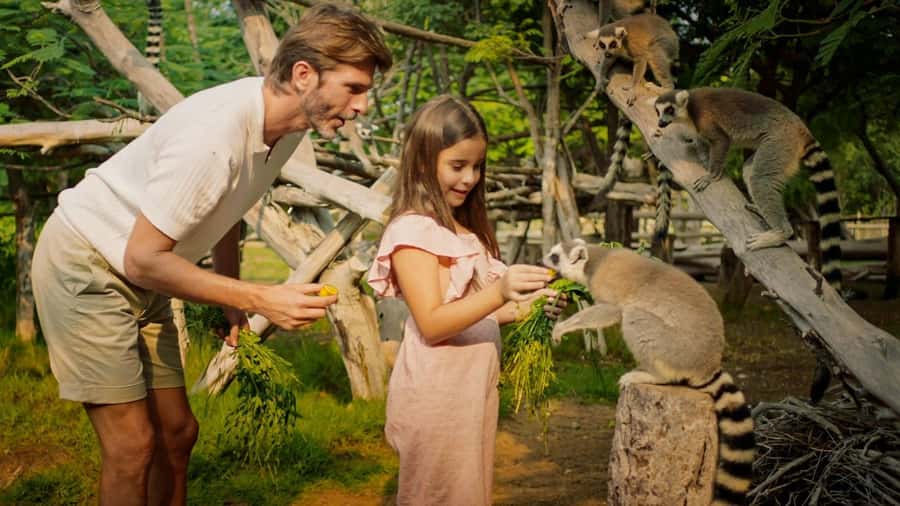
The Asian Village focuses on animals associated with Asian forests and ponds. This section gives the park a different mood from the open savannah areas, with habitats built around wooded and watery settings.
The layout is intended to show animals in surroundings that resemble their natural environment. That does not guarantee a close view every time, but it gives you a more satisfying setting than a simple row of cages.
Finish, or at least plan around, the Asian Village Theatre. The live animal presentations are educational and help explain the behavior and care of the species in the park. Three presentations are included with admission, but schedules can change, so check the timetable at the entrance or on the official website.
The theatre is also a useful rest point. If you are visiting with children, sitting down for a scheduled show can break up the walking and give everyone a fixed event to look forward to.
Kids Farm and the Grand Aviary
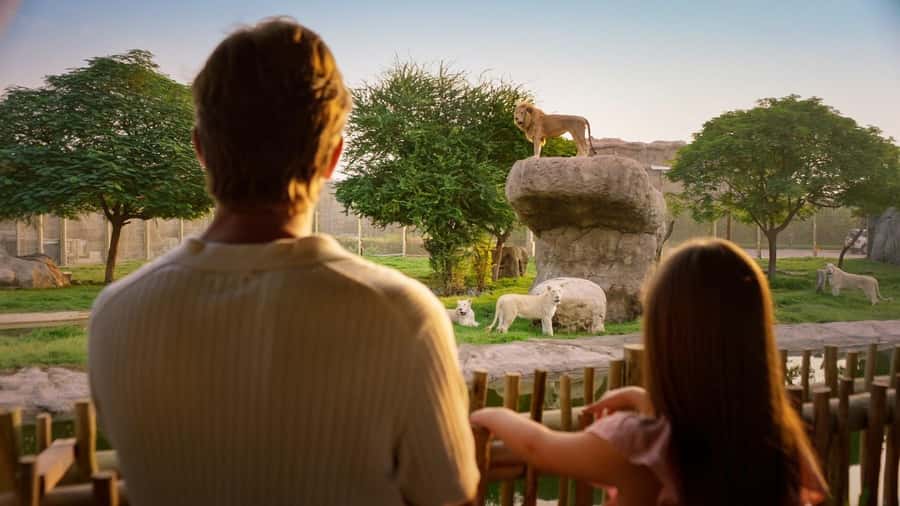
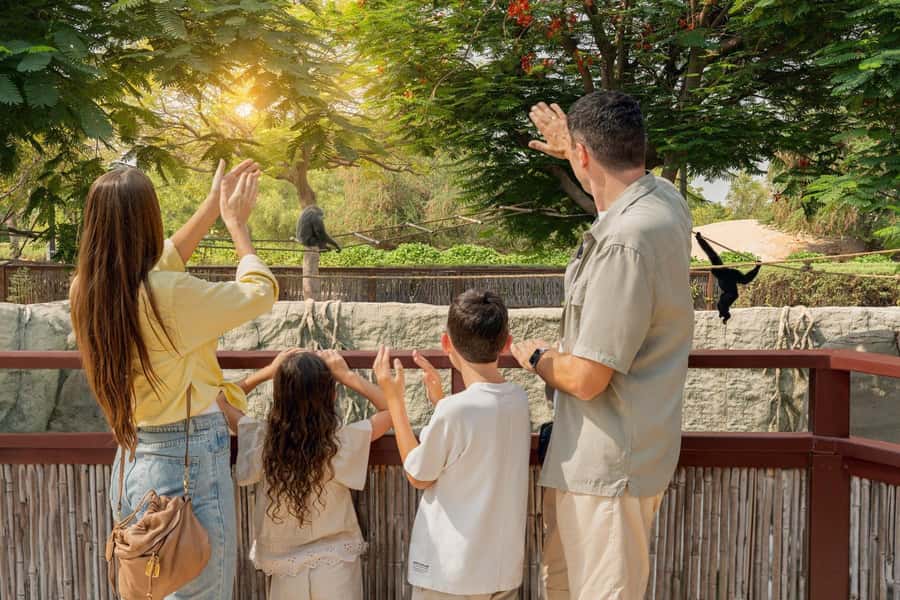
The Kids Farm is a natural stop for younger children. It includes familiar farm animals such as sheep, donkeys, ponies, goats, ducks, and birds. Children can connect with these animals more easily than with a distant lion or large antelope, and the hands-on setting adds variety to the day.
Some complimentary encounters are scheduled rather than available whenever you arrive. The free options include the Alwada Pony Walk, duck feeding, and bird feeding. Other feeding sessions and encounters cost extra and can be purchased at the park’s ticket counter.
The Grand Aviary is another highlight, especially if your family enjoys birds. It contains a wide range of bird species, and the sheer variety can take more time than you expect. Plan to slow down here instead of treating it as a corridor between larger exhibits.
The park’s animal shows and feeding activities are useful because they give you a reason to stop and observe. Without a schedule, it is easy to rush from one village to the next and miss the quieter parts of the visit.
Heat, shade, and animal activity
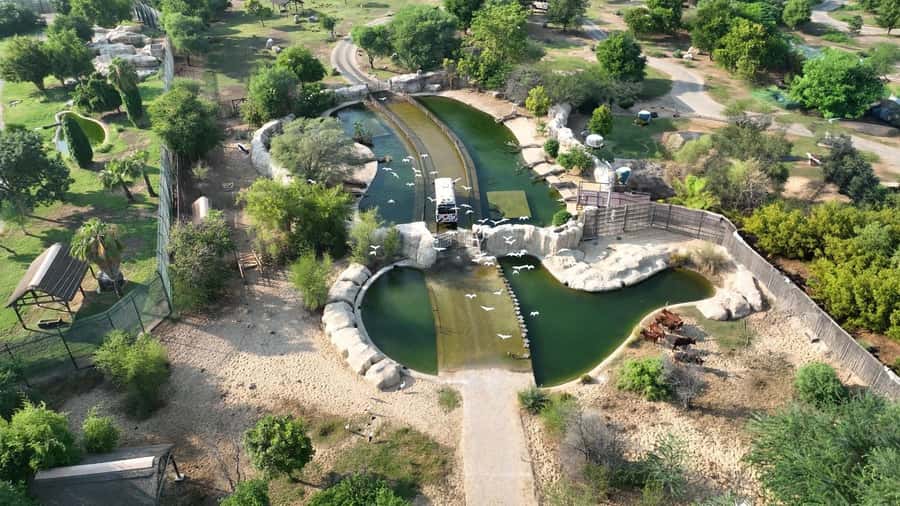
Dubai’s weather shapes the experience more than any map can show. The park has shaded areas, rest seats, and fans that spray a fine water mist. These are not decorative extras. They are central to enjoying a large outdoor attraction in the UAE.
The hot weather also affects the animals. Some may remain inside or be less active during the hottest periods, so an early visit gives you a better chance of seeing movement. One useful strategy is to visit outdoor sections earlier, take a shaded break around midday, and use indoor or covered areas when the sun is strongest.
Do not judge the park only by how many animals you see in the first ten minutes. Large habitats mean an animal may be resting, out of sight, or positioned well away from the viewing area. The Explorer bus and staff guidance improve your odds, but no wildlife park can guarantee a perfect view of every species.
Food, rest areas, and practical comfort
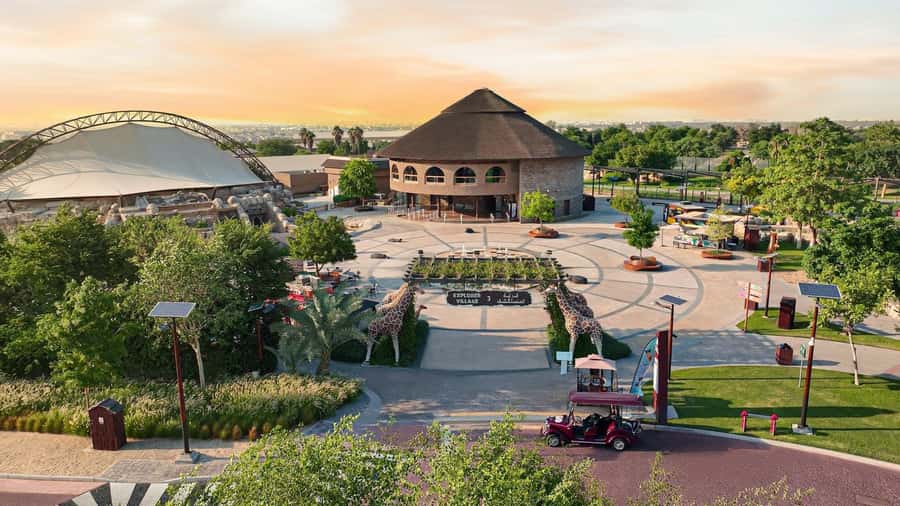
You do not need to leave the park to eat. Food stalls and drink points are available, and prices were described as reasonable. Seating and shade are placed around the grounds, giving you regular chances to rest.
Food and drinks are not included in the admission price. You also cannot bring food into the park, and smoking, vaping, flash photography, drones, bikes, scooters, skateboards, and pets are not allowed.
The no-flash rule is sensible around animals, but it also means you should avoid using a bright camera flash in darker indoor areas. Keep your photography quiet and respectful, and give the animals space.
The layout is generally easy to follow, though signage could be clearer in parts. If you are walking, check the map and the next scheduled presentation before leaving each village. That small bit of planning can prevent a long backtrack.
Getting to Al Warqa without a frustrating detour
There is no hotel pickup or drop-off included, so you arrange your own transport. The park is outside central Dubai, and the journey can be a meaningful part of your day.
A taxi can be expensive, especially if you are making a separate return trip from a distant area. One family reported paying 130 AED for the ride home. Public bus routes need care as well. Not every bus that appears close on a map stops at the park gate, and a wrong stop can leave you facing a long walk.
Maps may also show roads or entrances that do not provide access. Confirm the correct gate and route before you leave. If you are already joining another Dubai tour that can drop you nearby, combining the visits may save time and taxi cost, but do not assume every tour includes a transfer.
At the entrance, head straight to the gate and scan your ticket. The skip-the-line entry is simple. Children under three enter free with an identity card, while children aged three to twelve must be accompanied by an adult.
Is the Explorer bus or train worth paying for?
For most first-time visitors, I would spend extra on the Explorer Safari Tour before paying for every smaller animal encounter. The bus addresses the park’s biggest weakness, its wide footprint, and gives you closer views with less walking.
The train is also useful for moving between areas, especially if you are with young children or anyone who tires easily. But train information and departure details may not always be obvious, so ask staff about the route, type of train, and timetable before committing.
Paid feeding sessions can be excellent, but book them early if they are a priority. Giraffe feeding, in particular, can sell out for the entire day. The free pony, duck, and bird activities offer a useful alternative if paid slots disappear.
Your best package depends on your group. Active adults may be happy to walk. Families with small children, older relatives, or limited time will usually get more from the bus and train options.
Who will enjoy Dubai Safari Park most?
This is an easy choice for families, especially those with children who like animals and hands-on activities. The Kids Farm, shows, feeding sessions, and workshops give younger children plenty to do, while teenagers and adults can enjoy the larger habitats and safari ride.
It also suits anyone who wants a calmer day away from Dubai’s towers, malls, and indoor attractions. The conservation and rehabilitation focus adds purpose to the visit, and the well-maintained grounds make it feel like more than a basic animal collection.
You should think twice if you have only two or three hours, dislike walking, or want a guaranteed close view of every animal. You can shorten the visit, but the park rewards time. A rushed visit may leave you feeling that you paid to see only part of it.
Should you book Dubai Safari Park?
Book it if you can spare at least four to six hours and want a family-friendly wildlife day at a reasonable starting price. The combination of large animal areas, included presentations, the Arabian safari, cooling facilities, and optional close-up transport gives you plenty for the money.
I would choose an early arrival, check the daily schedule, and add the Explorer Safari Tour if your budget allows. If feeding giraffes or another special encounter matters to you, reserve that as soon as you arrive, since popular activities can fill quickly.
Skip it if your Dubai schedule is packed with central attractions or if the cost and time of reaching Al Warqa outweigh the wildlife experience for you. For everyone else, this is one of Dubai’s better-value full-day outings, provided you treat it as a proper day trip rather than a quick stop.
FAQ
How much does Dubai Safari Park entry cost?
The listed entry price is about $13 per person. Extra charges may apply for selected feeding sessions, animal encounters, the Explorer Safari Tour, and the train, depending on the ticket option you choose.
How long should I spend at Dubai Safari Park?
Plan on at least four to six hours. The park covers 119 hectares, and a full day is useful if you want to see all the villages, attend presentations, join activities, and take breaks.
Is the Arabian Desert safari included?
Yes. Admission includes a 15-minute Safari Tour in the Arabian Desert Zone.
Is the Explorer Safari Tour included?
It is included only if you select the relevant ticket option. Otherwise, you may need to pay an additional fee at the park or choose a different package.
Is the train ride included?
The train ride is included if you select a ticket option that contains it. It may cost extra with a basic entry ticket.
What free animal encounters are available?
The complimentary activities include the Alwada Pony Walk, duck feeding, and bird feeding. They operate according to the announced schedule.
Can I feed giraffes at the park?
Giraffe feeding is available as a paid activity, but it is not guaranteed to have space. Book early at the park if this is important to you.
Are children admitted for free?
Children under three years old enter free, but an identity card is required at entry. Children aged three to twelve must be accompanied by an adult.
Can I bring food or drinks into the park?
Food is not allowed inside. Food and drinks can be purchased at stalls within the park, and they are not included in the entry ticket.
What items are not allowed at Dubai Safari Park?
Pets, smoking materials, vaping devices, drones, bikes, flash photography, skateboards, scooters, and food are not allowed. Last admission is 90 minutes before closing.
Just added around Dubai
- Premium Desert safari With Dune buggy camel ride BBQ dinner★ 5.0 · 36 reviews
- Night City Tour of Dubai★ 4.5 · 14 reviews
- Dubai Sunrise / Morning private safari tour★ 5.0 · 18 reviews
- Sky Views Dubai with Options★ 4.5 · 17 reviews
- FLYBOARD 30mn session @ POPEYE JETSKI★ 5.0 · 80 reviews
- Full Day Hatta Mountain Tour from Dubai★ 5.0 · 23 reviews
- Explore Old Dubai Al fahidi District Museums Markets Abra★ 5.0 · 15 reviews
- Full Day Tour Exploring Abu Dhabi★ 5.0 · 13 reviews
Safari, compared.

Desert Safari, Quad Bike, Camel Ride & Al Khayma Camp
Read our review →
Desert Safari, Quad Bike, Camel Ride and Sandboarding
Read our review →
Safari, Quad Bike, Camel Ride, and Buffet Dinner
Read our review →
Red Dune Safari, Quad Bike, Camel Ride, BBQ Dinner
Read our review →
Premium Safari, Camel Ride & Al Khayma Camp 3-Buffets
Read our review →
Desert Safari with BBQ Dinner & Quad Biking Options
Read our review →
Half-Day Desert Safari, Camel Ride, ATV & Dune Buggy
Read our review →