
Reviewed · MUSEUM & CULTURE TOURS
Dubai: Private Old Town, Heritage & Souks Walking Tour
Dubai’s glittering towers tell only the newest chapter of the city’s story. This two-hour Old Dubai walk begins among courtyard homes, narrow lanes, wind towers, and old trading routes in Al Fahidi, then crosses Dubai Creek by traditional abra to reach the spice and gold markets.
I like the personal scale of this tour. Guides such as Pri, Ricky, Francesca, and Dana are known for clear storytelling, family-friendly pacing, and useful souk advice. I also like that the abra ride is part of the experience, not an extra you must arrange yourself.
The main drawback is the short running time. Two hours gives you a good introduction, but not much room for long shopping stops or a relaxed look inside every heritage house. You will also be walking outdoors, with no hotel pickup, so comfortable shoes and sun protection matter.
In This Review
- Key points at a glance
- Why Old Dubai makes the best starting point
- Al Bastakiya, courtyard houses, and the narrow lanes
- Walking toward Dubai Creek
- The abra crossing to Deira
- Spice Souk: aromas, tastings, and shopping advice
- Textile Market and the final walk to gold
- What the private format is really worth
- Timing, comfort, and family fit
- The best way to use your time
- Should you book the Old Dubai walking tour?
- FAQ
- Where does the tour begin?
- Where does the tour finish?
- How long does the experience last?
- Is the abra ride included?
- Are heritage-house entrances included?
- Which languages are available?
- Is hotel pickup included?
- Is the tour suitable for wheelchair users?
Key points at a glance
- Starts beside Arabian Tea House: Meet outside the well-known cafe in Bastakiya, within the Al Fahidi Historical Neighborhood.
- Walks through early Dubai: See Al Bastakiya, Dar Al Nadwa, XVA House, courtyard homes, and the narrow sikkas between them.
- Includes a traditional abra ride: Cross Dubai Creek to Deira by boat, with open views of the water and old trading waterfront.
- Covers three famous souks: Visit the textile, spice, and gold markets, with tastings and help understanding how to shop.
- Private English or Hindi guide: The format allows questions and a pace suited to your own group.
- Finishes at the Gold Souk: The ending point is useful if you want to continue shopping or arrange an Uber afterward.
Why Old Dubai makes the best starting point
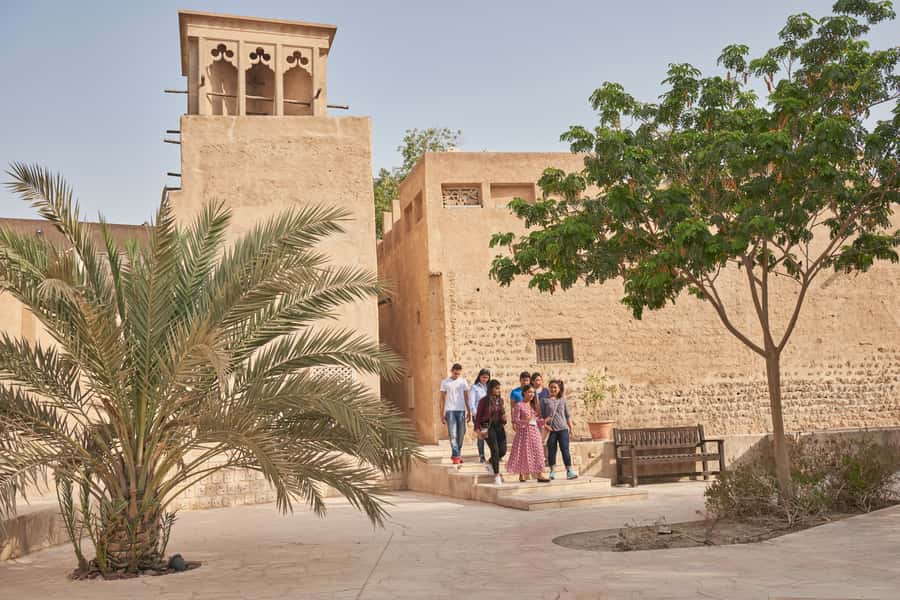
If your picture of Dubai is built around skyscrapers, shopping malls, and grand hotels, Al Fahidi supplies the missing first chapter. The area recalls a time when Dubai was a small desert trading town shaped by the creek, pearl fishing, seafaring, and trade with nearby regions.
The tour begins outside Arabian Tea House Restaurant & Cafe. That is a practical meeting point in the historic quarter, though you should allow time to find the entrance and arrive ready to walk. There is no pickup or drop-off, so you must make your own way there.
From the start, your guide places modern Dubai in context. The most useful part of this storytelling is the contrast between the modest early settlement and the global city you see today. You get a sense of how the creek supported trade and how the old neighborhoods were arranged before wide roads and high-rise buildings changed the city.
I would choose this walk early in a Dubai visit. It gives you cultural bearings before you spend time in the newer districts, and it can make later sightseeing feel less disconnected from the city’s past.
More museum & culture tours in Dubai:
- Dubai: Museum of the Future Admission Ticket
★ 4.3 · 21,464 reviews - From Dubai: Abu Dhabi Grand Mosque & Louvre Museum Full-Day
★ 4.8 · 6,227 reviews - Dubai Aladdin Tour: Souks, Creek, Old Dubai and Tastings
★ 5.0 · 3,755 reviews
Al Bastakiya, courtyard houses, and the narrow lanes
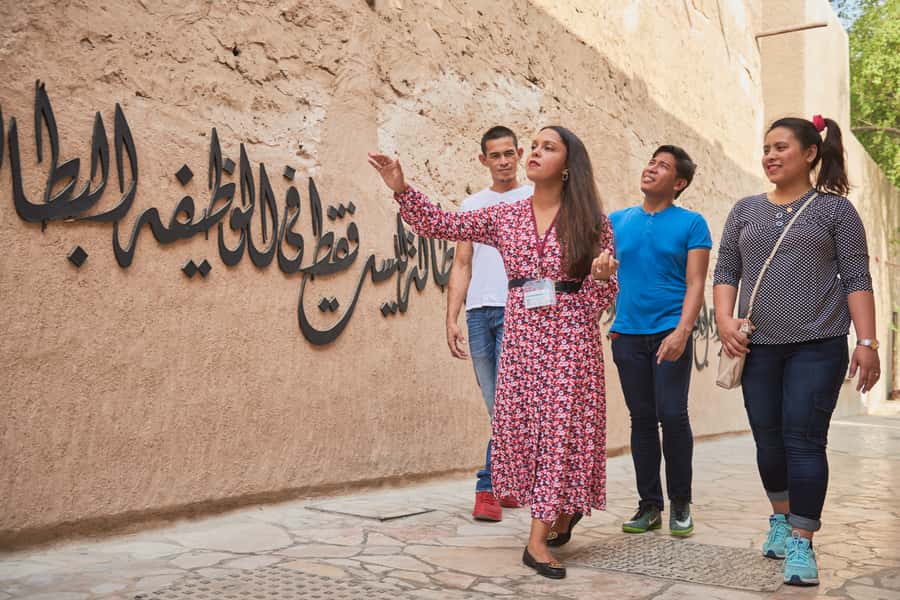
The first substantial section lasts about 40 minutes and focuses on Al Bastakiya, also known as the Bastakiya District. You walk through the old Al Fahidi Historical Neighborhood, passing courtyard houses and shaded lanes called sikkas.
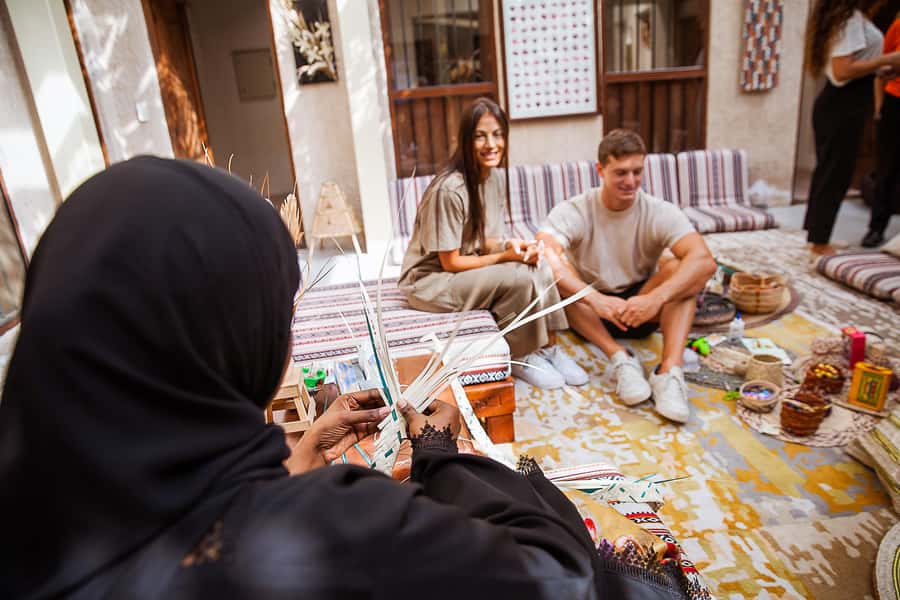
The stops include Dar Al Nadwa, XVA House, and old Al Fahidi courtyard homes. Heritage-house entrances are included, which matters because the interiors help explain how people adapted to life in a hot desert climate. The buildings offer more than a photo backdrop. They give your guide a place to explain domestic life, local customs, architecture, and the different communities that helped shape early Dubai.
XVA House also brings an art and design angle to the walk. That makes the first section more varied than a simple run through restored buildings. You are not just hearing dates and names. You are looking at how old structures are used and understood in present-day Dubai.
The narrow lanes are part of the charm, but they can also make the pace slower. Your group will not cover every corner of the district in two hours. The guide’s role is to choose representative places and connect them into a clear story.
This is where the private format earns its keep. Guides including Pri and Francesca have been praised for adjusting explanations for children, teens, and people who prefer slower English. If your group has a six-year-old, a ten-year-old, or older family members, tell the guide what level of detail works best.
Walking toward Dubai Creek
After the heritage quarter, the route heads toward Dubai Creek. The creek section lasts about 15 minutes and combines a short walk with sightseeing beside the water.
This transition is important. The old houses explain where people lived, while the creek explains why the settlement grew. Here, the tour shifts from domestic architecture to trade, transport, and the movement of goods between the two sides of the water.
You will also see traditional dhow boats during this part of the route. The boats help connect the waterfront to Dubai’s seafaring past and add scale to the story. The view is especially appealing when the light is softer, though the experience is still weather-dependent and fully outdoors.
Do not expect a long waterfront cruise. The creek visit is brief, and the dhow stop is listed at about 10 minutes. Think of it as a compact introduction before the abra crossing, not a separate boat excursion.
The abra crossing to Deira
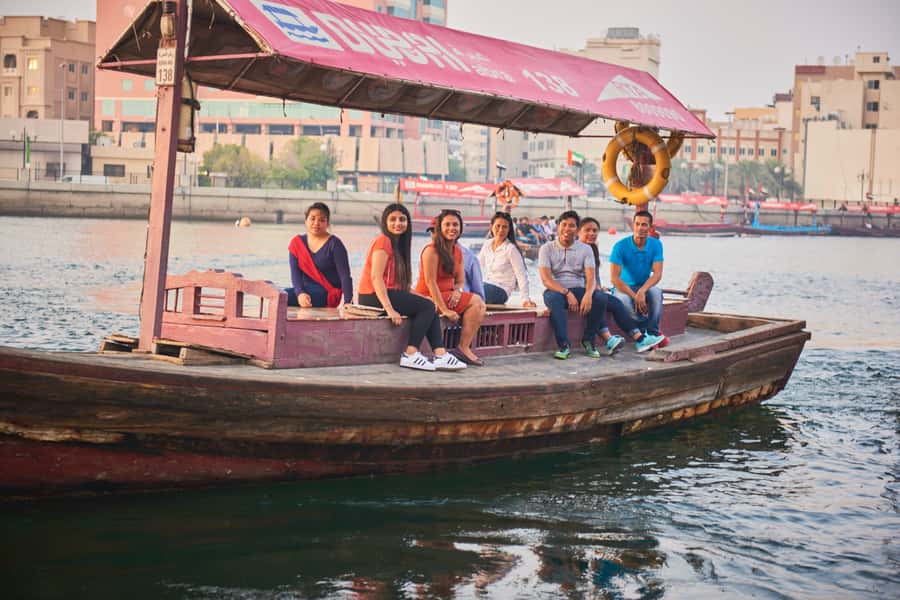
The traditional abra ride is the tour’s clearest sensory change. You leave the lanes of Al Fahidi, step onto a small traditional boat, and cross Dubai Creek to Deira.
The crossing provides open views that you cannot get while walking among the buildings. It also shows how ordinary water transport remains part of the Old Dubai experience. Several guides have made this ride a highlight by explaining the creek’s role while the boat moves between the two sides.
The ride is included in the price, so you do not need to arrange a separate ticket or work out the crossing on your own. Your guide handles the transition and keeps the route moving.
Keep your expectations in check. This is a short public-transport-style boat ride, not a private sightseeing cruise with a long commentary. That is part of its appeal: you experience a practical local crossing rather than a polished attraction built only for sightseeing.
The boat may be less comfortable for anyone who has trouble boarding or standing. The tour is specifically not suitable for wheelchair users, and the combination of walking, market lanes, and boat access makes mobility a real consideration.
A few more Dubai trips to weigh up
- Dubai Evening Heritage Safari by Vintage G Class Al Marmoom Oasis
★ 5.0 · 1,500 reviews - Dubai Camel Desert Safari, Traditional Meal & Heritage Activities
★ 5.0 · 937 reviews - Dubai: Heritage Safari in Vintage Land Rover with Dinner
★ 4.8 · 861 reviews - Dubai: Historic City Highlights Day Trip
★ 4.4 · 807 reviews
Spice Souk: aromas, tastings, and shopping advice
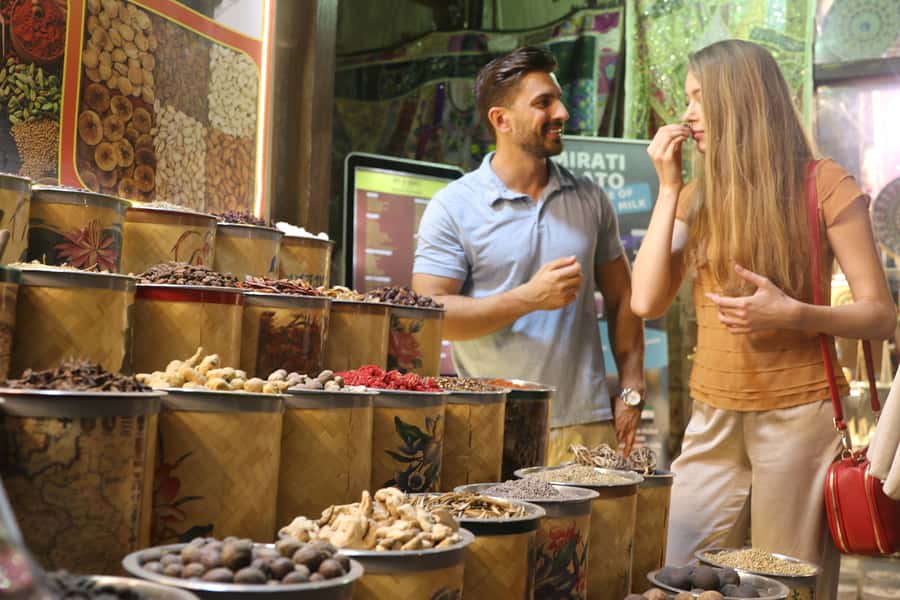
On the Deira side, the route takes you through the Spice Souk. The guided market visit lasts about 15 minutes, with time to look around, taste selected items, and learn how the market works.
This is a good place to use your guide as a practical filter. Souk sellers are persuasive, and a private guide can help you understand what you are looking at, how to compare prices, and how to bargain politely. Dana, Pri, and other guides have helped groups find reasonable deals and identify shops suited to what they actually wanted to buy.
Included tastings make the stop more than a visual stroll. You might sample spices or snacks, although the exact items can vary. If you have allergies or dietary concerns, tell the guide before tasting anything.
The market is colorful and full of scents, but it is also a shopping area. Some vendors may encourage you to buy. You are free to browse, and the tour does not require you to make a purchase. I suggest deciding in advance if you want souvenirs, edible gifts, or simply a look at the market, then using the guide’s advice to keep the stop focused.
The short timing is both a strength and a weakness. It prevents the souk from swallowing the entire tour, but it will feel brief if you want to compare many products or negotiate several purchases.
Textile Market and the final walk to gold

The textile market brings a different set of colors and products. You may see fabrics, scarves, garments, and small souvenirs, ranging from inexpensive keepsakes to more costly items. The tour includes time for shopping, but you should not treat it as a dedicated retail session.
Some descriptions place the textile market before the creek crossing, while the route as a whole connects it with the Deira markets and ends at the Gold Souk. In practical terms, your guide leads you through the relevant market streets as part of the Old Dubai story. Follow the guide’s route rather than expecting a rigid, minute-by-minute sequence.
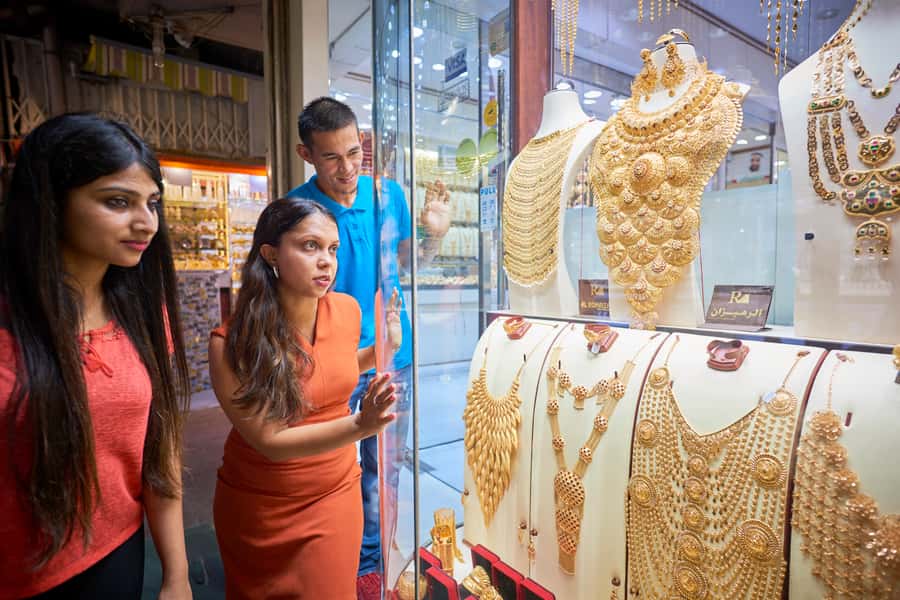
The final stop is the Gold Souk neighborhood. This is the biggest shopping-focused section in terms of visual impact, even if the scheduled visit is short. Storefronts display gold jewelry, diamond pieces, and other high-value items alongside lower-cost souvenirs.
You do not need to shop. The Gold Souk is worthwhile simply for the scale and presentation of the displays. If you do plan to buy, remember that a guide can offer general help with navigation and bargaining, but you should still make your own decisions about quality, pricing, receipts, and purchase terms.
Ending here is convenient. You can continue exploring Deira, shop independently, or call an Uber from the area, as one practical advantage of the finish point. It is less convenient if you hoped to return to your hotel with the guide, since transport back is not included.
What the private format is really worth
At $98 per person, this is not the cheapest way to see Old Dubai. The value depends on how much you want from the visit.
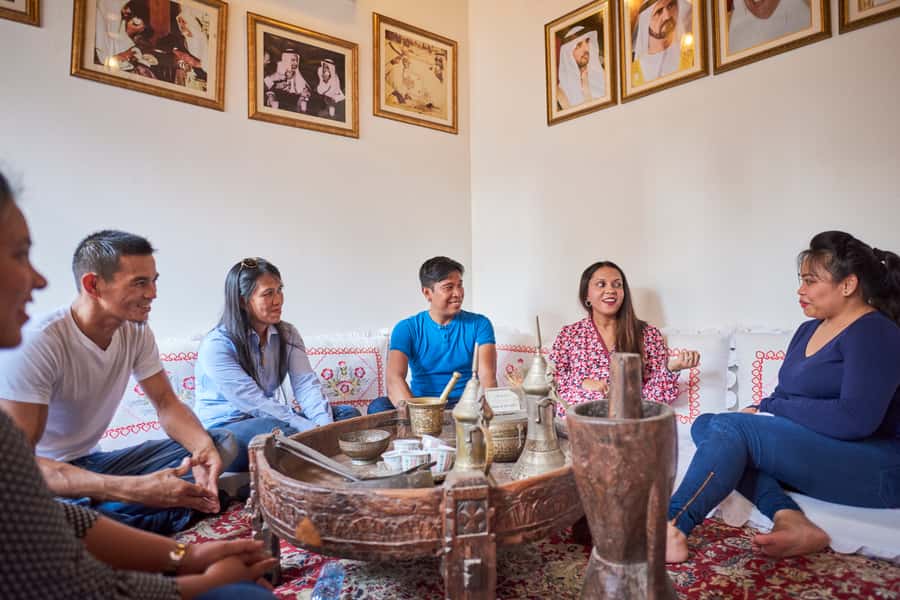
For a private group, the price buys more than a route map. You receive a live guide, heritage-house entrances, the abra crossing, spice tastings, and a small souvenir gift. Most important, you can ask questions without waiting for a large group to catch up, and the guide can adjust the pace or explanation to your interests.
That personal attention is particularly useful in the souks. A first-time visitor may find the market lanes confusing, while a guide can explain where you are, what you are seeing, and how to approach shopping. Several guides, including Pri and Dana, are especially good at keeping children involved and helping families get more from the short visit.
The price makes less sense if you are happy to wander independently, skip the heritage-house interiors, and arrange your own creek crossing. It also may not suit a solo budget traveler unless the personal service matters more than keeping costs low.
The company says its guides have received Dubai Culture Authority Tour Guide of the Year awards for three consecutive years. That is useful context, but the actual guide assigned to your group matters most. Pri, Ricky, Francesca, and Dana are among the names associated with especially warm, clear guiding, though you may not be able to request a particular person unless the operator confirms it.
Timing, comfort, and family fit
Two hours is an efficient length for a first look at the historic districts. You cover heritage buildings, the creek, a boat ride, and three market areas without giving up half a day.
The trade-off is a brisk structure. You will walk between stops, pause for short explanations, and have limited time for serious shopping. If your priority is buying gold or comparing textiles, plan to stay in Deira after the tour.
Wear comfortable shoes. The route includes old lanes, market streets, and walking between the historic quarter and the waterfront. Bring sunscreen, since much of the experience is outside and shade is not guaranteed at every point.
Families can do well with this tour. Multiple guides have adapted their explanations for children and teenagers, and the mix of boats, stories, tastings, and markets gives younger visitors several things to focus on. Still, a child who dislikes walking or crowded shopping areas may find the pace tiring.
The tour is offered in English and Hindi. If English is not your strongest language, say so at the beginning. Guides have adjusted their speech and spoken slowly when needed, which can make the historical details much easier to follow.
The best way to use your time
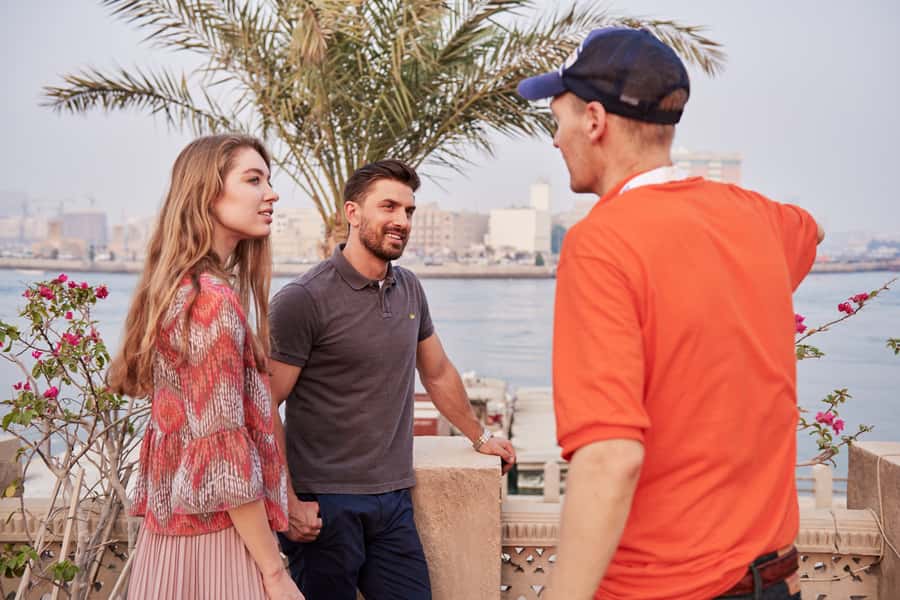
I would book this tour for your first or second day in Dubai, preferably at a time that does not force you to rush from a distant attraction. The meeting point is in Al Fahidi, and the finish is in the Gold Souk area, so plan your day around that west-to-east movement.
Bring a small amount of spending money if you want tastings or souvenirs, but do not feel pressured to shop. The main value is the guided context, not the number of purchases you make.
Ask questions about the parts of Dubai that interest you most. You can focus on architecture, pearl fishing, trade, religion, food, modern art, or shopping customs. A private tour gives you more room to shape the conversation than a large scheduled group.
It is also smart to leave extra time after the finish. The Gold Souk deserves a slower look than the tour schedule allows, and you may want to return to a shop or continue into nearby market streets.
Should you book the Old Dubai walking tour?
Book it if you want a clear, personal introduction to Dubai’s origins rather than another polished look at the modern skyline. The best parts are the heritage houses, the creek crossing, and the guide’s help making sense of the souks.
The tour suits first-time visitors, families, couples, and anyone who wants history explained in plain language. It is also a good choice if you have only a short window and want several Old Dubai highlights in one compact outing.
Skip it if you dislike walking, cannot manage the abra boarding, need wheelchair access, or want hours of unhurried shopping. At $98 per person, it is a service-led experience, not a bargain transport option. For the right group, though, the private guide and well-planned route make Old Dubai much easier to understand and enjoy.
FAQ
Where does the tour begin?
It begins outside Arabian Tea House Restaurant & Cafe in Bastakiya, within the Al Fahidi Historical Neighborhood.
Where does the tour finish?
The tour finishes in the Gold Souk neighborhood on the Deira side of Dubai.
How long does the experience last?
The walking tour lasts two hours.
Is the abra ride included?
Yes. The traditional abra ride across Dubai Creek is included.
Are heritage-house entrances included?
Yes. Museum and heritage-house entrances are included in the tour price.
Which languages are available?
Live guiding is available in English and Hindi.
Is hotel pickup included?
No. Pickup and drop-off are not included, so you must travel to the meeting point and arrange transport after the tour.
Is the tour suitable for wheelchair users?
No. The experience is listed as not suitable for wheelchair users.
More Walking Tours in Dubai
- Middle Eastern Food & Culture Walk in Old Dubai
★ 5.0 · 206 reviews - Historic Old Dubai & Souk Small Group Walking Tour
★ 5.0 · 156 reviews - Dubai Souks, Food & Culture Walking Tour
★ 5.0 · 132 reviews - Private Old Dubai Walking Tour: Forts, Souks, and Boats
★ 5.0 · 116 reviews
Just added around Dubai
- Premium Desert safari With Dune buggy camel ride BBQ dinner★ 5.0 · 36 reviews
- Night City Tour of Dubai★ 4.5 · 14 reviews
- Sky Views Dubai with Options★ 4.5 · 17 reviews
- FLYBOARD 30mn session @ POPEYE JETSKI★ 5.0 · 80 reviews
- Dubai Sunrise / Morning private safari tour★ 5.0 · 18 reviews
- Full Day Hatta Mountain Tour from Dubai★ 5.0 · 23 reviews
- Explore Old Dubai Al fahidi District Museums Markets Abra★ 5.0 · 15 reviews
- Full Day Tour Exploring Abu Dhabi★ 5.0 · 13 reviews
Museum & Culture Tours, compared.

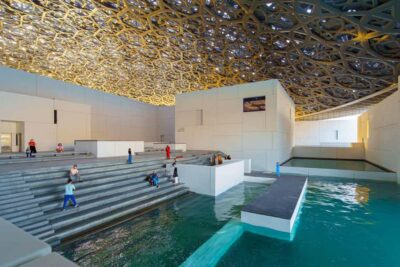
Abu Dhabi Grand Mosque & Louvre Museum Full-Day
Read our review →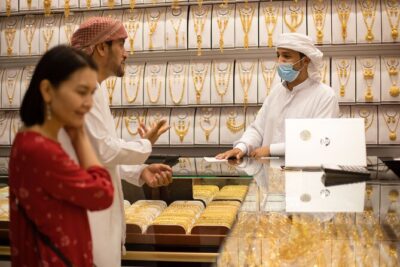
Dubai Aladdin Tour: Souks, Creek, Old Dubai and Tastings
Read our review →
Dubai Evening Heritage Safari by Vintage G Class Al Marmoom Oasis
Read our review →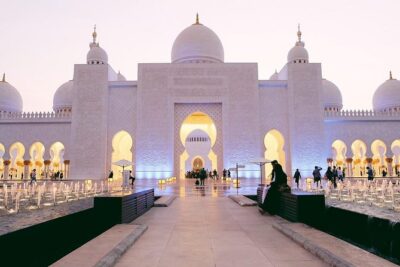
Abu Dhabi City Tour, Grand Mosque, Emirates Palace & The Louvre
Read our review →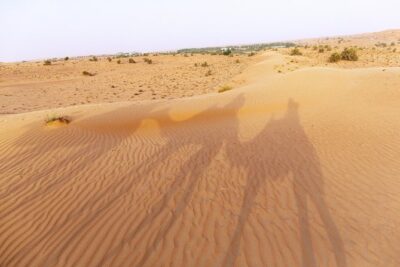
Dubai Camel Desert Safari, Traditional Meal & Heritage Activities
Read our review →
Heritage Safari in Vintage Land Rover with Dinner
Read our review →
Old Dubai tour: Local Market, Tasting, Dubai creek with Abra ride
Read our review →Browse the lists this tour appears in