
Reviewed · MUSEUM & CULTURE TOURS
Museum of Illusions Entry Ticket
The Museum of Illusions turns a short visit into a cheerful battle between your eyes and your brain. You can walk through the UAE’s first Vortex Tunnel, distort your reflection, lose yourself in an Infinity Room, and test hands-on puzzles that make simple ideas feel wonderfully strange. I especially like the clever photo opportunities and the staff’s willingness to help with both explanations and camera work.
I also like the setting. The museum sits at Al Seef beside Dubai Creek, in the Old Dubai area, so you can pair the visit with a relaxed walk and an open-air meal. The main caution is size: at $24 per person, this is a compact attraction, and many people finish it in 30 minutes to an hour.
In This Review
- Key points at a glance
- What the $24 ticket actually gives you
- Finding the museum at Al Seef
- First tests: optical illusions and perception
- The Vortex Tunnel and the feeling of a moving floor
- Mirror Room, Infinity Room, and photo opportunities
- Holograms and the science behind the tricks
- The playroom: good for curious minds, sometimes frustrating
- How long to allow, and how to plan the visit
- Who will enjoy this most
- The best way to combine it with Old Dubai
- Practical details before you go
- Should you book the Museum of Illusions?
- FAQ
- Where is the Museum of Illusions in Dubai?
- How much does entry cost?
- How long does the visit take?
- Is the visit guided?
- Can staff take photos for me?
- Is the museum suitable for children?
- Is the museum wheelchair accessible?
- Can I cancel my booking?
Key points at a glance
- The Vortex Tunnel makes a flat floor feel unstable as a rotating cylinder plays tricks on your balance.
- Museum staff help with photos, a real advantage if you visit alone or want the best angle for each illusion.
- The visit is self-guided in English, with explanations beside the installations and help available when a puzzle seems unclear.
- Al Seef adds value beyond the ticket, with Dubai Creek, Old Dubai character, cafés, and a pleasant place to walk afterward.
- The museum suits children and adults, though some games can be frustrating and the attraction is not large.
- Wheelchair users can access the museum, and the ticket is valid for one day.
What the $24 ticket actually gives you
Your ticket covers entry to the Museum of Illusions in Al Seef. It does not describe a formal guided tour, so you are free to move through the installations at your own pace. English is the stated language, and staff are present to explain how an illusion works or show you where to stand for a photograph.
At $24, this is not a full-day attraction. The useful question is not how long you can stretch the visit, but whether you value a concentrated set of interactive exhibits in a convenient part of Dubai. If you enjoy taking pictures, visiting with children, or want something different from the usual shopping and skyscraper circuit, the price can make sense.
If you expect a large science center with many galleries, you may feel short-changed. The museum is small, and several visitors finish in about half an hour. Plan it as one stop in a wider Al Seef outing, not as the sole activity for an entire day.
The booking terms add some flexibility. You can cancel up to 24 hours before the visit for a full refund, and the reserve-now, pay-later option lets you hold a place without paying immediately. The ticket is valid for one day, with available starting times shown when you check.
More museum & culture tours in Dubai:
- Dubai: Museum of the Future Admission Ticket
★ 4.3 · 21,464 reviews - From Dubai: Abu Dhabi Grand Mosque & Louvre Museum Full-Day
★ 4.8 · 6,227 reviews - Dubai Aladdin Tour: Souks, Creek, Old Dubai and Tastings
★ 5.0 · 3,755 reviews
Finding the museum at Al Seef
The meeting point is the Museum of Illusions at Al Seef, Dubai Creek, Dubai. The area matters because the museum is not isolated from the rest of the city. It sits in a district designed for walking, with cafés and creekside views nearby.
Finding the entrance may take a little patience. One useful orientation point is Starbucks, which is directly across from the museum. Once you arrive, allow time to look around rather than rushing straight back to a taxi or hotel.
Al Seef gives the visit a calmer setting than Dubai’s major indoor malls. You can walk by the creek before or after the museum, then stop for lunch at an open-air café. That combination helps the ticket feel like part of a half-day plan instead of a quick trip for a few pictures.
I would place this stop into a day focused on Old Dubai and the creek. The museum itself is modern and playful, while the surrounding area offers a different mood from the city’s glass towers. You get a useful change of pace without needing a separate full-day excursion.
First tests: optical illusions and perception
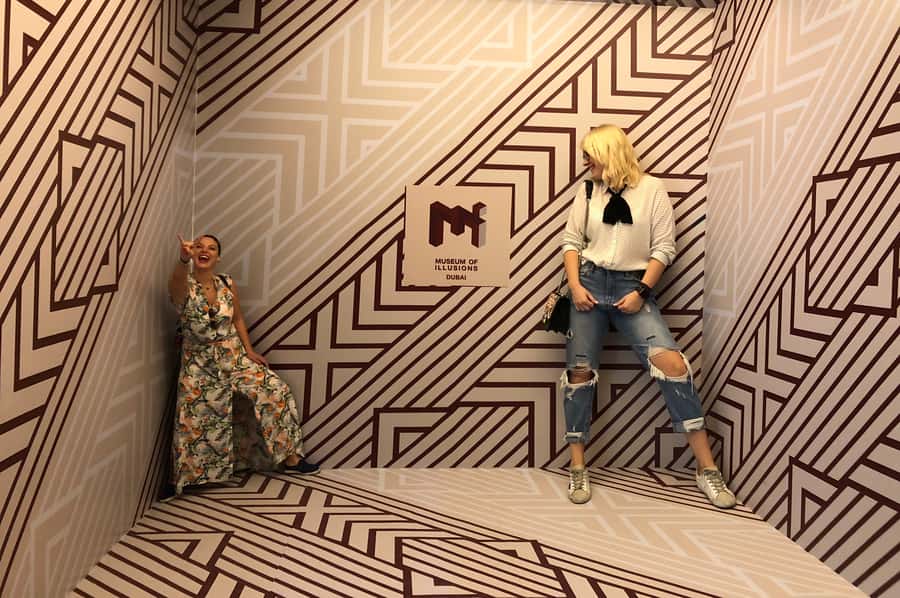
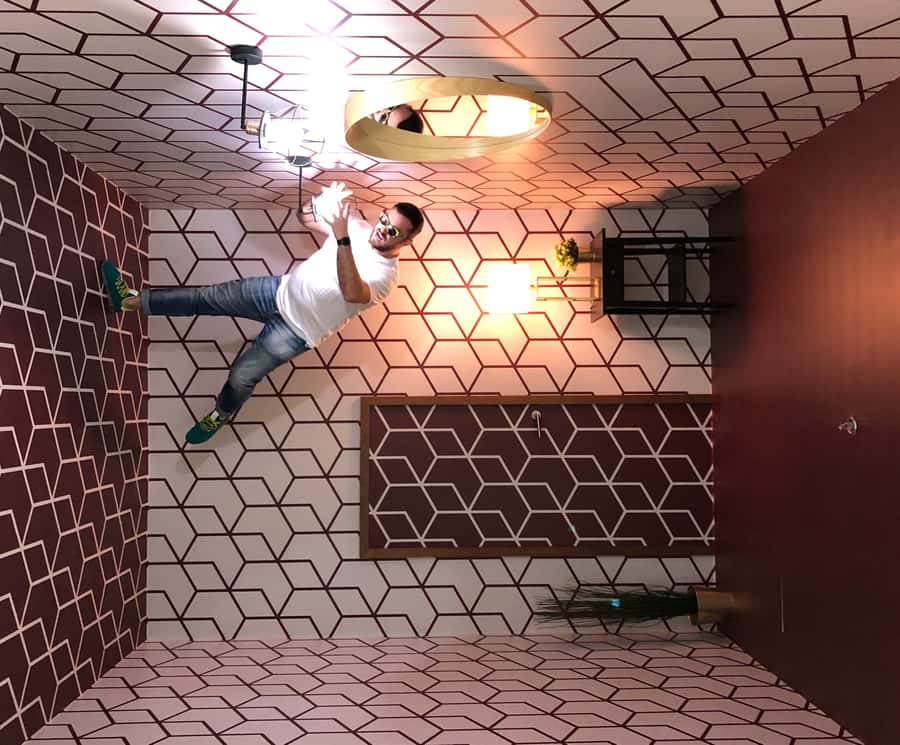
Inside, the central idea is simple: your eyes collect information, but your brain decides what it means. The installations use distorted shapes, reflections, perspective, and movement to show how easily that decision can go wrong.
You are not simply looking at objects behind glass. Many exhibits ask you to stand in a particular place, change your angle, or interact with the room. Clear written information explains the principle behind each illusion, so the visit has more substance than a collection of amusing backdrops.
This educational layer is especially useful with children. A young visitor can enjoy the odd picture first, then learn why the room appears to tilt or why a reflection changes shape. Adults get the same lesson, often after being fooled by an effect they expected to understand.
Some illusions work immediately. Others require you to read the instructions carefully and adjust your position. Do not rush past an exhibit just because the first glance seems ordinary. Staff can show you how to see the effect correctly, and that small bit of guidance can turn a confusing display into the best part of the visit.
The Vortex Tunnel and the feeling of a moving floor
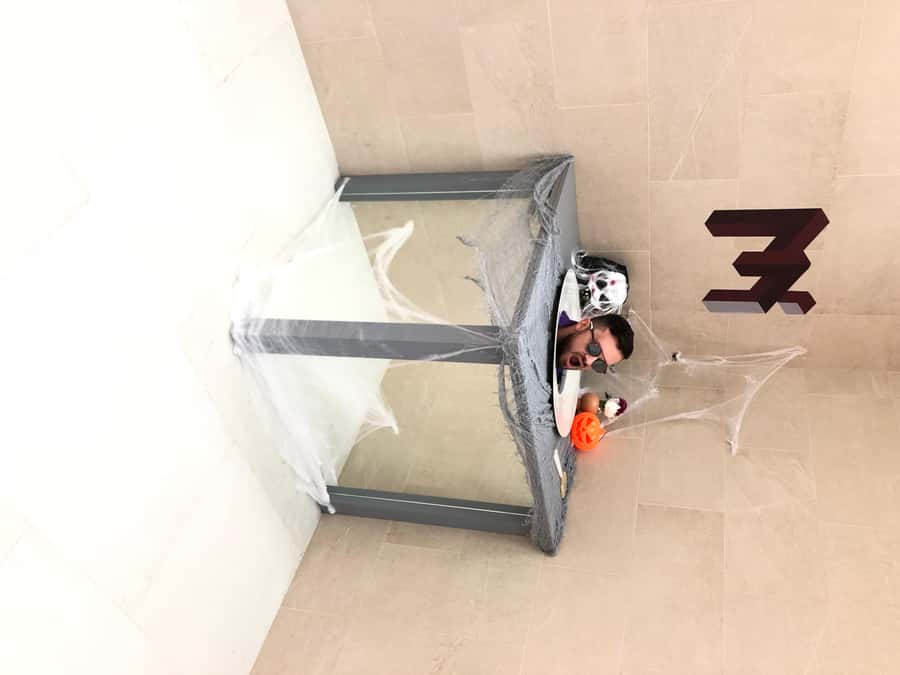
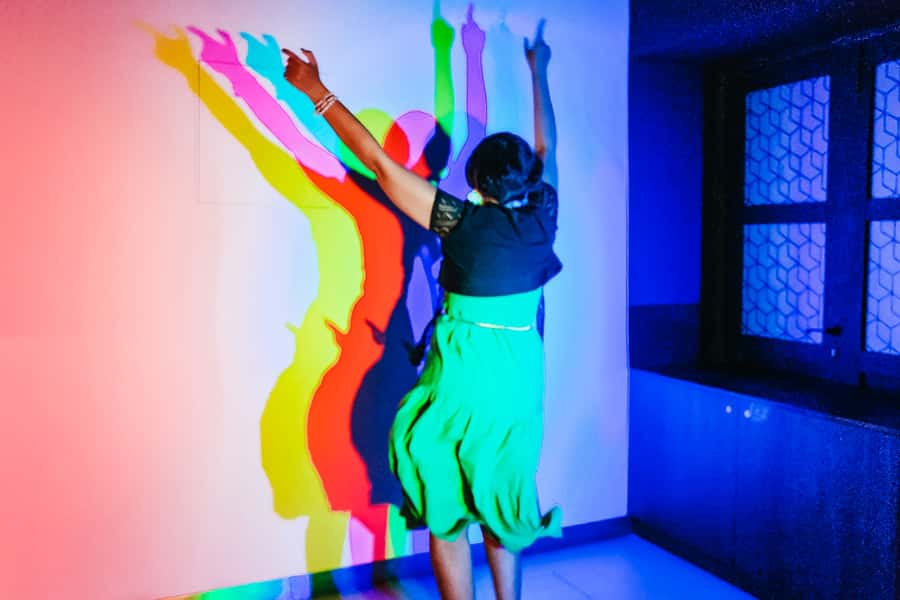
The Vortex Tunnel is the museum’s most physical challenge. You walk through a rotating cylinder while the surface under your feet remains stable and flat. The visual motion tells your brain that the ground is shifting, even though it is not.
This is a good example of the museum’s appeal. You understand the explanation, yet your body still reacts to what your eyes are telling it. The result is funny, slightly disorienting, and more memorable than simply reading about optical perception.
Take your time here. The tunnel is intended to make you feel unsteady, so it may not suit everyone equally. The supplied information does not give medical restrictions, but anyone who knows that rotating visual effects bother them should use personal judgment.
The Vortex Tunnel also works well as a shared experience. One person can watch while another makes the attempt, and the changing balance creates natural photo and video moments. Staff are on hand to explain the exhibit and help you get the right shot.
A few more Dubai trips to weigh up
- Dubai: Old Town, Creek, Museums, Souks, & Street Food Tour
★ 4.8 · 10,816 reviews - Museum of the Future Tickets
★ 3.5 · 792 reviews - From Dubai: Abu Dhabi Day Tour with Grand Mosque & Louvre Museum
★ 5.0 · 517 reviews - Dubai: Future Museum, Burj Al Arab, and Dubai Frame Tour
★ 4.5 · 514 reviews
Mirror Room, Infinity Room, and photo opportunities
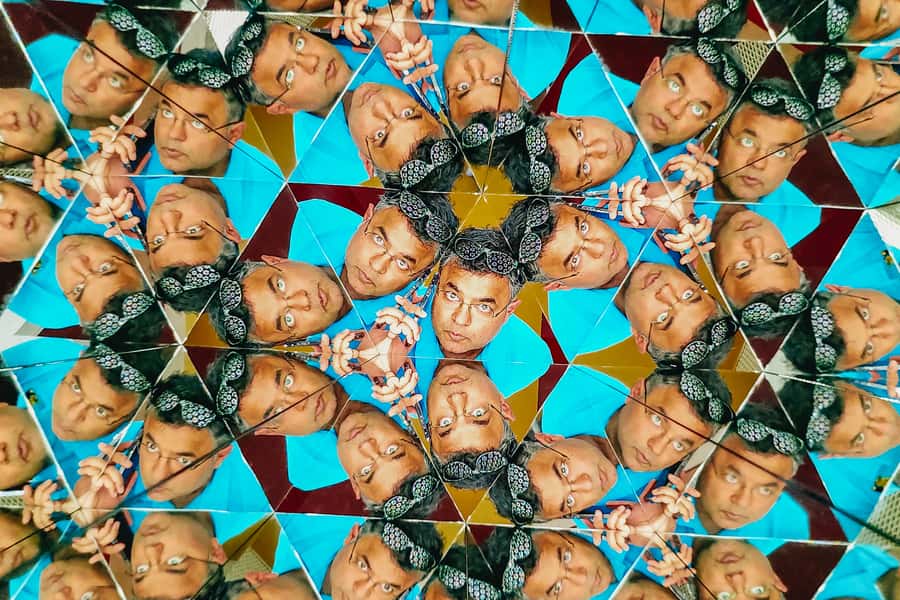
The Mirror Room distorts your reflection, turning a familiar image into something odd and sometimes comic. It is a simple idea, but the effect is strong because mirrors usually feel trustworthy. Here, they make you question the shape and size of the person looking back.
The Infinity Room offers a different sensation. Reflections extend the space so that the room seems to continue far beyond its actual walls. It is designed for photographs, but the visual effect is also a neat lesson in repetition and perspective.
You can resist gravity and play with shapes in other installations, posing in ways that appear impossible when captured on a phone. The museum encourages you to take a camera, and you should. The visit’s strongest souvenirs are usually the pictures rather than a long stretch of exhibit time.
I would not worry about visiting alone. Staff regularly help solo visitors take photos, and they know where to place the camera and how to position your body for the intended effect. If you visit as a couple or family, some images are easier because two people can create a stronger scene together, but a solo visit remains practical.
Bring a phone or camera with enough battery and storage. That is not a minor tip here. The exhibits are built around seeing yourself inside the illusion, so a camera adds real value to the ticket.
Holograms and the science behind the tricks
The hologram collection adds another layer to the visit. You can look closely at images that seem to change or appear three-dimensional, then compare what you see with the explanation beside the display.
The museum uses these exhibits to introduce vision, perception, the human brain, and basic science. You do not need a technical background. The value comes from noticing the gap between what your eyes report and what your mind assumes.
I like this approach because it keeps the lessons short. You are not sitting through a lecture or following a fixed presentation. You see an effect, react to it, and then read enough to understand the trick.
That format also lets different age groups enjoy the same room in different ways. Children can focus on the surprise. Adults can spend more time on the reason the illusion works. If one exhibit does not hold your attention, you can move on without waiting for a group.
The playroom: good for curious minds, sometimes frustrating
Set aside time for the playroom. It contains educational games and puzzles that ask you to solve problems, spot patterns, or challenge your sense of space.
This room can be a pleasant change after the photo installations. You stop posing and start thinking. It also gives families a place where children can take the lead while adults work through the same challenge.
The puzzles are not all easy. Some are genuinely frustrating, which is part of the fun for people who enjoy brain-teasers and a nuisance for anyone hoping for instant success. If your group includes children, expect a little competition and allow everyone time to try.
The playroom strengthens the museum’s educational purpose, but it does not make the attraction larger. You will still see the main areas fairly quickly. Think of the games as extra ways to spend time, not as a separate major gallery.
How long to allow, and how to plan the visit
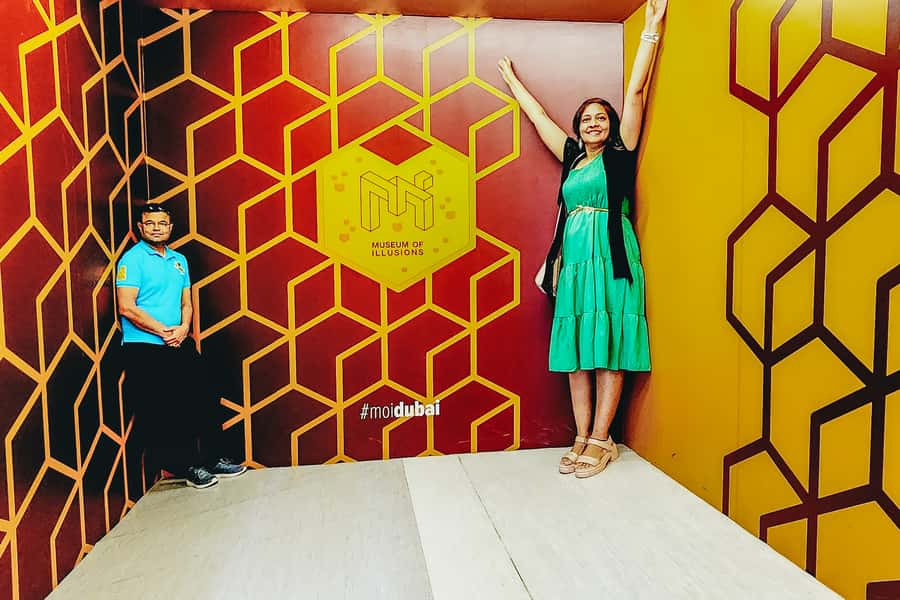
The official validity is one day, but the practical visit is much shorter. About 30 minutes may be enough if you move quickly through the exhibits. An hour is a more comfortable allowance if you want to read the explanations, retry puzzles, and take pictures.
I would schedule one to two hours in the wider Al Seef area around it. That gives you room for the museum, a creekside walk, and lunch or coffee nearby. It also removes pressure from the compact indoor portion.
The attraction has no stated fixed tour start time in the information provided. You check availability for starting times when booking. Since the ticket is for entry and the visit is self-guided, you should not expect a long hosted program.
Staff are English-speaking and available to assist. Their role is particularly helpful at exhibits where the correct camera position is not obvious. They can also explain the intended effect, so ask rather than abandoning a display that seems unclear.
The museum is on one level according to one detailed visit, and the activity is listed as wheelchair accessible. That makes it easier for many people to move between installations, though you should still contact the provider directly if you need precise information about a particular device or entrance.
Who will enjoy this most
Families with children around primary-school age and older are a natural match. The museum combines bright visual effects, physical interaction, puzzles, and short science explanations. It gives children something to do rather than asking them to look quietly at a traditional display.
Couples can also have a good time here, especially if they like playful photographs. Several installations are more entertaining when two people pose together, and the short length makes it easy to fit between other plans.
Solo visitors should not rule it out. Staff help take pictures, and the attraction’s self-guided design means you do not need to join a group. If your main goal is to collect unusual Dubai photos, you may find the ticket worthwhile even without company.
Art and photography fans have another reason to come. The rooms are designed around composition, reflection, scale, and perspective. You can experiment with different poses and angles rather than simply pointing a camera at an object.
I would be less likely to recommend it to someone seeking a large museum or a long educational program. The exhibits are clever but compact, and the attraction can be finished quickly. Your expectations matter more here than the raw ticket price.
The best way to combine it with Old Dubai
Make the location part of the plan. After the museum, walk around Al Seef and along Dubai Creek. The area offers a quieter break from the city’s major commercial districts, with cafés where you can sit outside and continue the outing.
The contrast is useful. Inside, the museum questions your senses through mirrors, tunnels, and perspective. Outside, the creek and older-style surroundings give you a more grounded sense of place. You get two different sides of Dubai in one stop.
Because the museum is small, I would avoid crossing the city only for this ticket unless you have a strong interest in optical illusions or photography. If you are already visiting Al Seef, it becomes a much more sensible addition.
Practical details before you go
Bring a camera or phone. Staff can take pictures for you, including for solo visits, and they know the best positions for many exhibits.
The host or greeter language is English. The experience is self-guided rather than a formal guided walk, with written information and staff assistance available inside.
The attraction is wheelchair accessible and listed as being on one level. For detailed accessibility questions beyond that, check directly before booking.
The price is $24 per person. Since the museum may take 30 minutes to an hour, I consider it fair only when you value the interactive nature, photo opportunities, and Al Seef setting. It is less convincing as a stand-alone, all-day attraction.
The activity has a rating of 4.3 from 778 reviews, which fits my assessment: the concept and staff support are strong, while the small size is the main limitation. Go for playful interaction, not scale.
Should you book the Museum of Illusions?
Book it if you want a light, family-friendly stop with clever photo rooms, simple science, and helpful staff. It is especially easy to recommend when you are already planning time at Al Seef or Dubai Creek.
I would also book it for a solo visit if you enjoy photography. Staff can help with the camera, and you do not need a companion to use the installations.
Skip it if you want a full-day museum or a large number of exhibits for your $24. The visit is compact, and some puzzles may frustrate you. But paired with a walk and meal at Al Seef, it becomes a practical and entertaining part of a Dubai day.
FAQ
Where is the Museum of Illusions in Dubai?
It is located at Al Seef, Dubai Creek, Dubai, in the Old Dubai area.
How much does entry cost?
The listed price is $24 per person.
How long does the visit take?
The ticket is valid for one day, but the museum itself may take about 30 minutes to an hour to explore, depending on how long you spend taking pictures, reading explanations, and solving puzzles.
Is the visit guided?
The experience is self-guided. English-speaking staff or greeters are available to explain exhibits and help visitors use them correctly.
Can staff take photos for me?
Yes. Staff help visitors take pictures, including people visiting alone, and can suggest the best places to stand for each illusion.
Is the museum suitable for children?
Yes. The attraction is designed for all generations and includes optical illusions, interactive installations, educational games, and puzzles.
Is the museum wheelchair accessible?
Yes. The activity is listed as wheelchair accessible, and the museum is described as being on one level.
Can I cancel my booking?
You can cancel up to 24 hours in advance for a full refund. A reserve-now, pay-later option is also available.
Just added around Dubai
- Premium Desert safari With Dune buggy camel ride BBQ dinner★ 5.0 · 36 reviews
- Night City Tour of Dubai★ 4.5 · 14 reviews
- FLYBOARD 30mn session @ POPEYE JETSKI★ 5.0 · 80 reviews
- Dubai Sunrise / Morning private safari tour★ 5.0 · 18 reviews
- Sky Views Dubai with Options★ 4.5 · 17 reviews
- Full Day Hatta Mountain Tour from Dubai★ 5.0 · 23 reviews
- Explore Old Dubai Al fahidi District Museums Markets Abra★ 5.0 · 15 reviews
- Full Day Tour Exploring Abu Dhabi★ 5.0 · 13 reviews
Museum & Culture Tours, compared.
Abu Dhabi Grand Mosque & Louvre Museum Full-Day
Read our review →
Dubai Aladdin Tour: Souks, Creek, Old Dubai and Tastings
Read our review →
Dubai Evening Heritage Safari by Vintage G Class Al Marmoom Oasis
Read our review →
Abu Dhabi City Tour, Grand Mosque, Emirates Palace & The Louvre
Read our review →
Dubai Camel Desert Safari, Traditional Meal & Heritage Activities
Read our review →
Heritage Safari in Vintage Land Rover with Dinner
Read our review →
Old Dubai tour: Local Market, Tasting, Dubai creek with Abra ride
Read our review →Browse the lists this tour appears in