
Reviewed · MUSEUM & CULTURE TOURS
Dubai: Al Shindagha Museum Entry Ticket
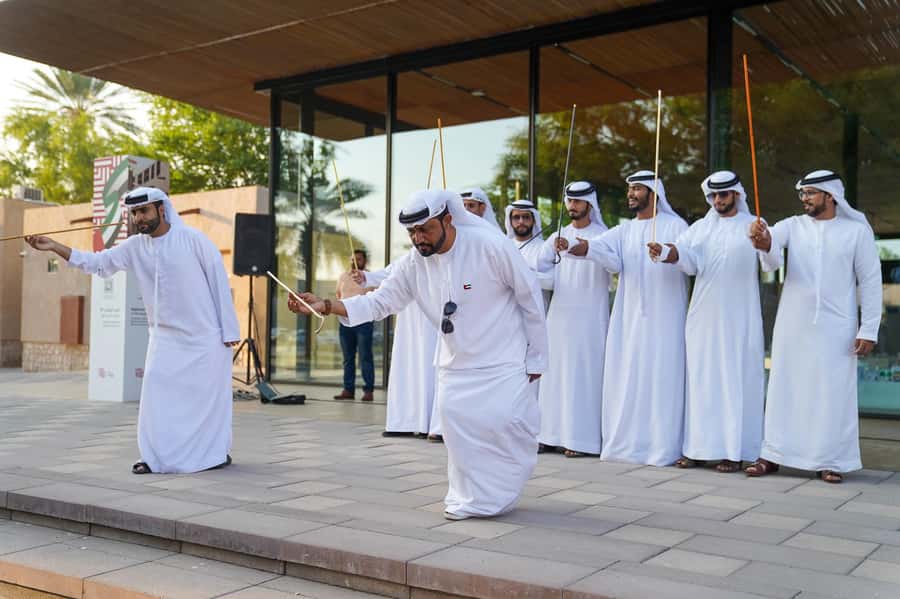
Al Shindagha Museum puts Dubai’s story in the very neighborhood where the city’s ruling family once lived. Instead of one building with a few display cases, you walk through a large heritage district beside Dubai Creek, moving from the Sheikh Saeed Al Maktoum Residence to houses about perfume, trade, food, faith, crafts, and the sea. I like the strong sense of place, and I like that modern technology, including virtual reality, helps connect older traditions with present-day Dubai.
I also appreciate the range. You can spend a short visit on the main houses or use the one-day ticket to take your time. The main consideration is scale: with more than 20 houses and many different themes, you may need to choose your priorities rather than see everything in one quick pass. Some visitors also mention Peter by name, so ask at the visitor center if he is guiding that day.
In This Review
- Key points
- Why Al Shindagha Museum feels different from a standard Dubai museum
- Entering the visitor center and planning your route
- Sheikh Saeed Al Maktoum Residence and the Al Maktoum story
- Dubai Creek: the birth of a city
- Trade, journeys, navigation, and the culture of the sea
- Perfume, jewelry, crafts, and beauty
- Life on land, food, healthcare, and faith
- Expressions, poetry, and the Community Hall
- Children’s Pavilion and family appeal
- What the $13 ticket is really worth
- How to make your visit work better
- Who should book Al Shindagha Museum?
- Should you book this museum ticket?
- FAQ
- Where is Al Shindagha Museum located?
- How much does entry cost?
- How long is the ticket valid?
- What does the ticket include?
- Are guided tours available in other languages?
- Is the museum wheelchair accessible?
Key points
- Dubai Creek setting: Explore the historic Al Shindagha neighborhood, where the museum links Dubai’s past with its modern identity.
- Sheikh Saeed Al Maktoum Residence: Enter the former home of Dubai’s ruler and the Al Maktoum family until 1958.
- More than 20 heritage houses: Move through separate spaces covering perfume, jewelry, crafts, food, trade, navigation, poetry, and family life.
- Interactive presentation: Expect multi-sensory displays and virtual reality rather than a museum based only on written panels.
- Five guide languages: Tours and guide support are offered in English, Arabic, Chinese, Russian, and French.
- Flexible one-day visit: Your ticket is valid for one day, giving you room to set your own pace.
Why Al Shindagha Museum feels different from a standard Dubai museum
Dubai often presents itself through towers, shopping centers, and polished new attractions. Al Shindagha takes you in the other direction, to the Creek and the older Al Shindagha quarter. This matters because the setting explains much of what you see inside. The museum is not telling Dubai’s story from a distant gallery. It places that story in the area connected with the Al Maktoum family and the city’s early growth.
The museum presents Dubai as a place shaped by work, trade, family, belief, craft, and a close relationship with the sea. You get a broader picture than the familiar story of oil and skyscrapers. The exhibitions focus on the human skills and daily choices that helped the city develop.
I find this approach useful for first-time visitors because it gives context to modern Dubai. After seeing the city’s newer districts, you can come here and consider the older foundations beneath them. The setting beside Dubai Creek also gives the visit a strong sense of location, even before you enter the individual houses.
More museum & culture tours in Dubai:
- Dubai: Museum of the Future Admission Ticket
★ 4.3 · 21,464 reviews - From Dubai: Abu Dhabi Grand Mosque & Louvre Museum Full-Day
★ 4.8 · 6,227 reviews - Dubai Aladdin Tour: Souks, Creek, Old Dubai and Tastings
★ 5.0 · 3,755 reviews
Entering the visitor center and planning your route
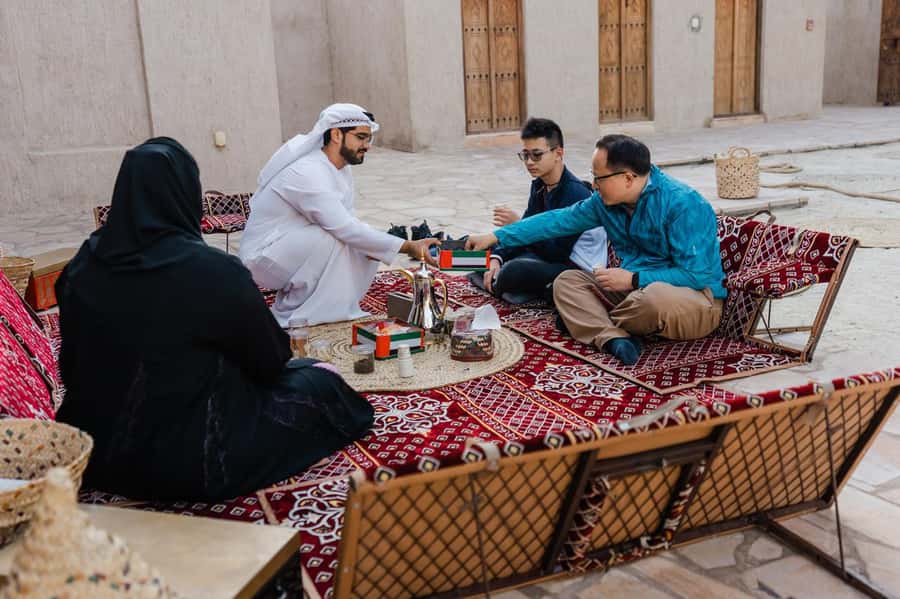
Your visit begins at the Visitor Center, which serves as the practical starting point for a museum spread across a large collection of buildings. Since the complex includes more than 20 heritage houses, take a moment to understand the layout before setting off. The ticket is valid for one day, so there is no need to rush from room to room.
This is one of the most important tips for using the ticket well. A quick visit can give you a taste of the museum, but the number of themes makes a longer stay more worthwhile. You may want to select a few houses that match your interests, then add others if you still have time and energy.
The museum uses interactive and multi-sensory installations, so the experience is not limited to reading labels. You might encounter virtual reality, workshops, guided tours, or training activities depending on what is operating during your visit. The exact order and availability of these elements is not specified, so treat them as features of the museum rather than guaranteed stops on a fixed tour.
Guide support is available in English, Arabic, Chinese, Russian, and French. If you prefer a guided visit, check the available language when you arrive. One booking note specifically praises a guide named Peter, but guide assignments can change, so you should not book on the assumption that he will lead your visit.
Sheikh Saeed Al Maktoum Residence and the Al Maktoum story
The Sheikh Saeed Al Maktoum Residence is the most important historic house in the complex. It was originally home to the Al Maktoum family and to Sheikh Saeed Al Maktoum, who was Dubai’s ruler at the time, until 1958. He was also the grandfather of Sheikh Mohammed bin Rashid.
This house gives the museum a personal and political center. Instead of thinking about Dubai only through trade statistics or architectural growth, you can consider the household and leadership connected with the city’s development. The residence helps anchor the wider museum in a particular family, period, and place.
You should allow enough time here to look beyond the headline name. The value is not simply that an important family lived there. The residence helps you picture the setting from which Dubai was governed during a period of major change. It also gives the rest of the museum a useful reference point: the nearby houses explain the society, skills, and activities that supported the city.
Dubai Creek: the birth of a city
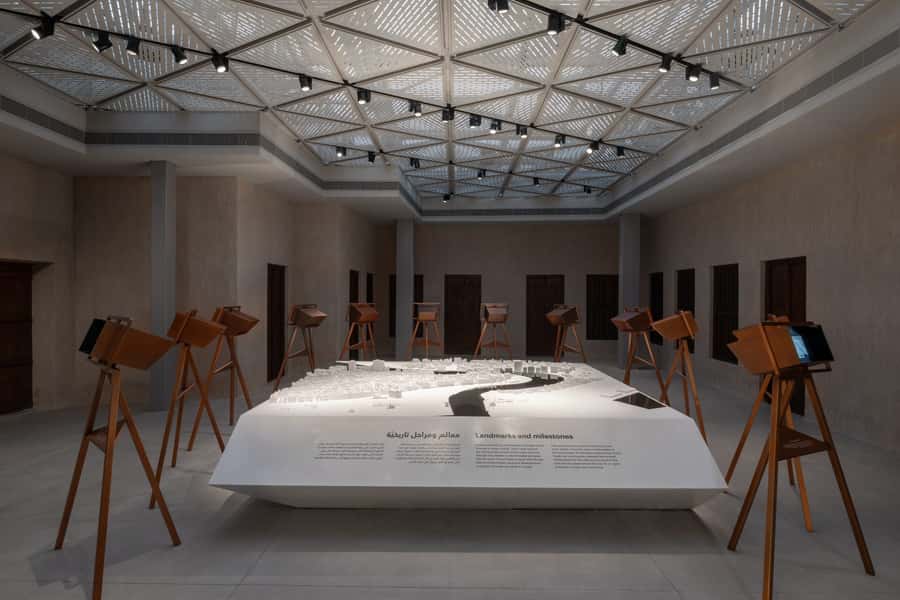
The Dubai Creek: Birth of a City house is a natural early stop because it explains why this part of Dubai mattered. The Creek is central to the museum’s story, and the exhibition connects the waterway with the emergence of the city.
This section should appeal to you if you want to understand how geography and human effort worked together. Dubai’s growth did not begin with modern towers. It developed through movement, exchange, family networks, work, and access to the water. The museum uses its Creek location to make that point in a direct way.
The drawback is that a single exhibition cannot explain every stage of Dubai’s development. You will get a broad, accessible account rather than a specialist study. For most visitors, that is a strength, especially when combined with the other houses. The different subjects fill out the story piece by piece.
A few more Dubai trips to weigh up
- Dubai: Old Town, Creek, Museums, Souks, & Street Food Tour
★ 4.8 · 10,816 reviews - Museum of the Future Tickets
★ 3.5 · 792 reviews - Museum of Illusions Entry Ticket
★ 4.3 · 778 reviews - From Dubai: Abu Dhabi Day Tour with Grand Mosque & Louvre Museum
★ 5.0 · 517 reviews
Trade, journeys, navigation, and the culture of the sea
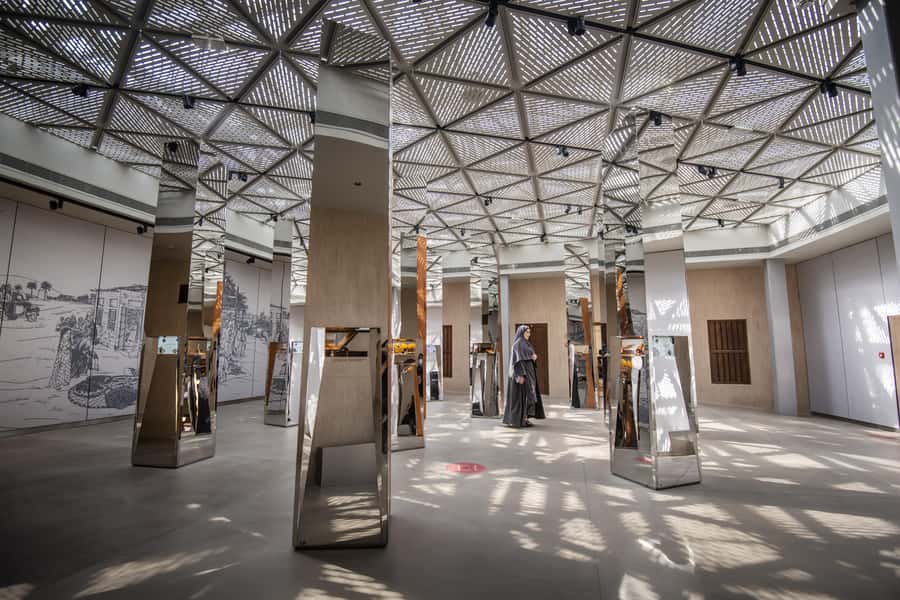
Trade and Journeys, Navigation, and Culture of the Sea form one of the strongest groups of themes for understanding Dubai’s wider connections. These houses point to the movement of people, goods, ideas, and skills across the region.
Navigation adds a practical side to the story. It shifts attention away from grand events and toward the knowledge needed to travel and work at sea. Culture of the Sea brings in the traditions and values connected with that life. Together, these subjects show why the Creek was more than a scenic waterway. It was part of the city’s working identity.
Trade and Journeys should also help you place Dubai within a larger regional network. The museum’s focus is on Emirati heritage, but the subjects naturally reach beyond one neighborhood. You can see how travel and exchange helped shape the city’s outlook.
If you have limited time, I would group these houses together. They share a clear thread, and seeing them in the same visit makes the museum’s account of Dubai’s growth easier to follow.
Perfume, jewelry, crafts, and beauty
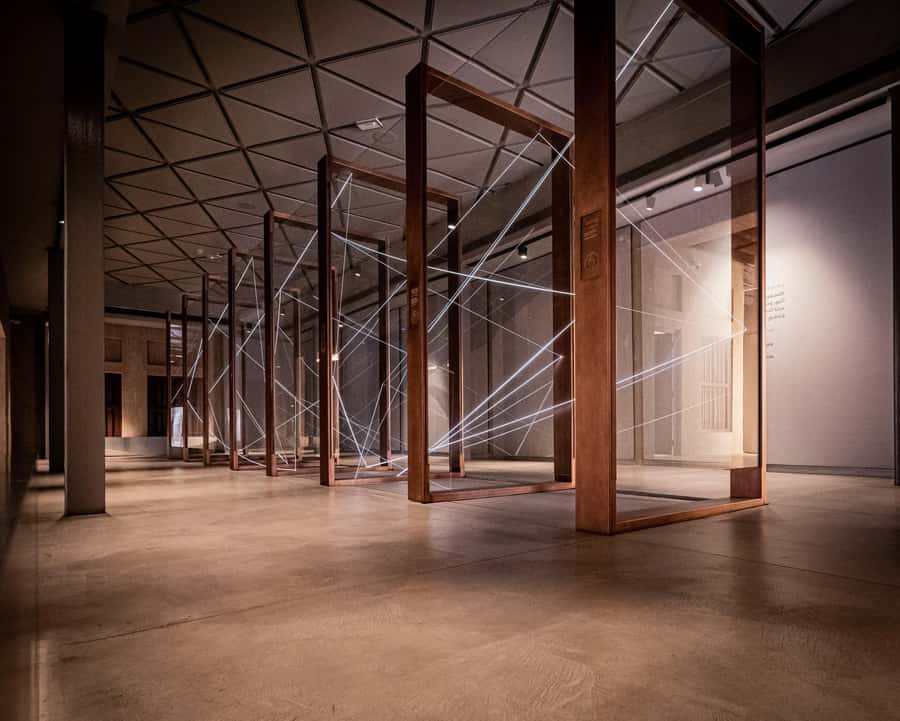
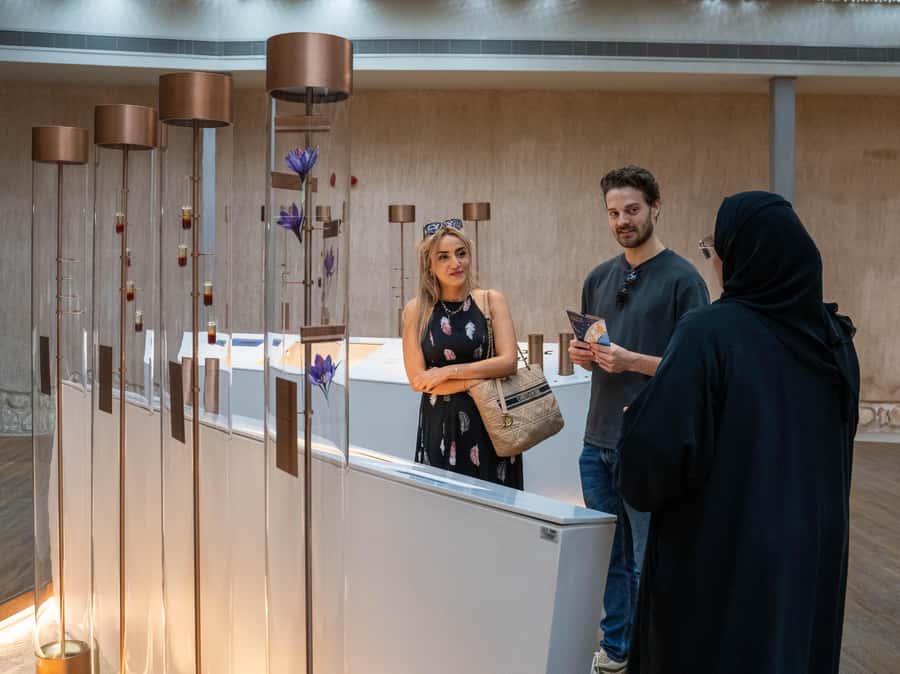
The Perfume House, Traditional Jewelry, Traditional Crafts, and Beauty and Adornment houses move the focus to objects, techniques, and personal style. These are useful stops if you prefer close-up cultural details to broad historical explanations.
Perfume offers an entry point through scent and custom. Jewelry and adornment show how materials and design can carry meaning beyond decoration. Traditional Crafts points to the hand skills behind everyday objects and inherited practices. The separate houses let you compare these subjects instead of treating all traditional culture as one general category.
I like this part of the museum because it makes heritage feel practical. You are not only looking at a date or a ruler. You are considering what people wore, made, used, and passed on. The interactive format may make these subjects easier to approach for families and younger visitors, though the amount of information may feel uneven from one house to another.
Life on land, food, healthcare, and faith
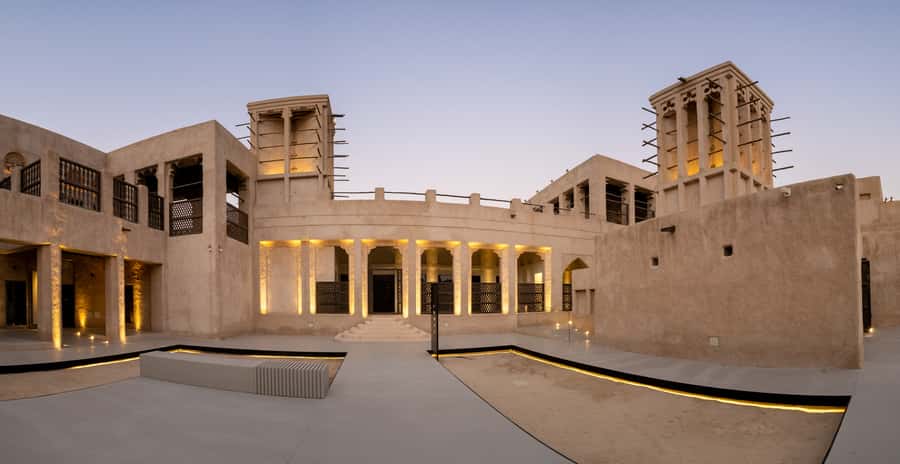
The houses devoted to Life on Land, Traditional Food, Traditional Healthcare, and People and Faith broaden the picture again. They deal with the routines and beliefs that shape a community away from official buildings and major trade routes.
Traditional Food is especially useful because food gives you a simple way to think about environment, family, and custom. Traditional Healthcare adds another everyday layer, showing how people cared for health before modern systems became dominant. Life on Land helps balance the attention given to the Creek and the sea.
People and Faith places religious and community life within the wider story. These themes are valuable because they prevent the museum from becoming only a tale of commerce and political leadership. Dubai’s identity is presented as something formed through home life, belief, work, and shared practice.
The subject range can also be the museum’s challenge. If you prefer a tightly ordered historical timeline, the house-by-house format may feel less direct. I suggest reading the introductory material at the Visitor Center and then viewing the complex as a collection of connected chapters rather than one straight route.
Expressions, poetry, and the Community Hall
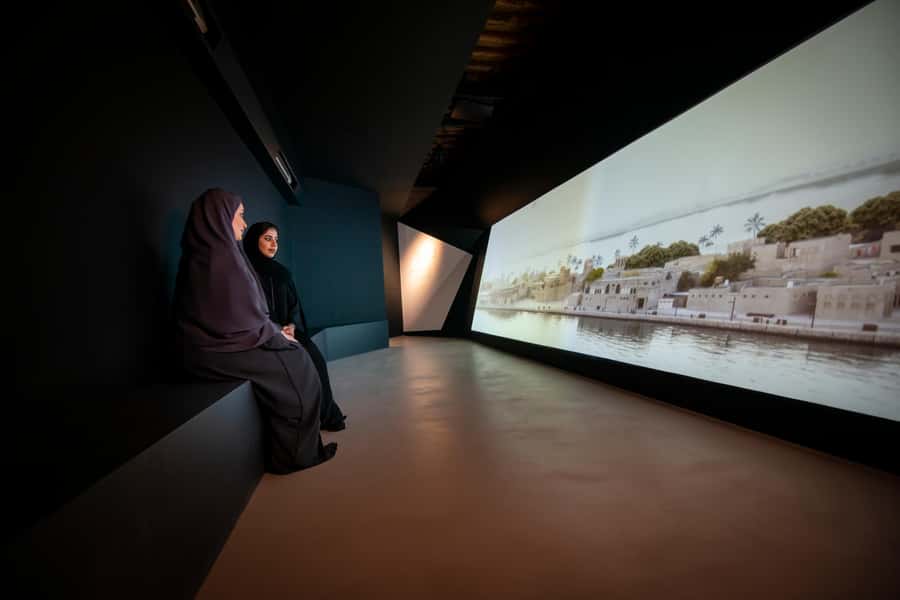
Expressions and Poetry show how Emirati identity is carried through creative work and language. These houses add a more personal and reflective side to the museum’s main story of innovation, resilience, and progress.
Poetry is important here because it provides a way to consider memory, emotion, and ideas through words. Expressions broadens that theme beyond one form. The Community Hall adds a social setting, helping you picture heritage as something shared rather than locked away in a display.
These houses may appeal most to you if you enjoy cultural interpretation rather than a purely object-based museum. They also offer a change of pace after the houses focused on trade, food, and traditional work.
Children’s Pavilion and family appeal
The Children’s Pavilion gives families a clear reason to include Al Shindagha in a Dubai sightseeing plan. The museum’s wider use of interactive installations should also help younger visitors stay involved, particularly if they respond better to visual and hands-on material than long blocks of text.
You should still plan the visit around your family’s attention span. The ticket lasts one day, but that does not mean children will want to see every house in one stretch. Choose a few themes, take breaks, and treat the museum as a place to explore rather than a checklist.
Adults without children can also use the pavilion as part of the broader picture. It shows that the museum is designed to pass heritage to new generations, not only to present the past to specialists.
What the $13 ticket is really worth
At $13 per person, the ticket offers good value if you plan to spend several hours exploring. You are not paying for one small gallery. Your admission covers access to a major heritage museum complex with the Sheikh Saeed Al Maktoum Residence, the Visitor Center, and more than 20 themed houses.
The value is strongest for visitors who enjoy variety. You can move from Creek history to perfume, then from navigation to food, faith, poetry, or crafts. The ticket also suits mixed-interest groups because different people can choose different houses.
The value is weaker if you want a short, highly focused attraction. A person looking only for one historic residence or one brief introduction to Dubai may not use the full scope of the admission. In that case, the large layout could feel like more than needed.
Free cancellation up to 24 hours before the visit and a reserve-now, pay-later option add useful flexibility. The ticket is valid for one day, and starting times depend on availability. Wheelchair access is provided, another practical benefit for visitors who need an accessible venue.
How to make your visit work better
I would begin with the Visitor Center, then choose a route based on your interests. History-minded visitors can start with Dubai Creek: Birth of a City and Sheikh Saeed Al Maktoum Residence. Families may prefer the Children’s Pavilion early in the visit, while culture-focused visitors can make time for perfume, jewelry, crafts, food, and poetry.
Give the museum more than a rushed stop if your schedule allows. The number of houses means you will get more from the ticket when you pause at the installations instead of trying to cover every doorway quickly.
If a guide is available in your preferred language, consider using that support for the first part of the visit. English, Arabic, Chinese, Russian, and French are listed options. You can then continue independently and return to the houses that interest you most.
Because the complex includes interactive content, allow for a slower pace than you might use in a conventional gallery. A virtual reality presentation or workshop can change how long you spend in one section. The experience is designed to engage more than just your eyes, so rushing would miss part of the point.
Who should book Al Shindagha Museum?
I would recommend this ticket to you if you want to understand Dubai beyond its modern skyline. It is a particularly good match for families, first-time visitors, people interested in Emirati culture, and anyone who likes museums with several subjects under one ticket.
It also suits travelers who want flexibility. You receive a full day of validity rather than being tied to a short, single-room tour. Multilingual guide options make it easier for international visitors to follow the material.
You may want to skip it if your Dubai schedule is extremely tight or if you prefer one short, tightly arranged attraction. The museum’s size is part of its appeal, but it also requires some planning and stamina.
Should you book this museum ticket?
Book it if you want a substantial look at Dubai’s origins, family life, trade, craftsmanship, faith, food, and connection with the sea. The $13 price is reasonable for a one-day admission covering the Sheikh Saeed Al Maktoum Residence and a large group of themed houses.
My practical advice is to treat Al Shindagha as a half-day or longer cultural visit, not a quick photo stop. Start at the Visitor Center, pick your priority houses, and leave room for the interactive exhibits. If you want modern Dubai to make more sense, this is one of the better places to begin.
FAQ
Where is Al Shindagha Museum located?
Al Shindagha Museum is located in the historic Al Shindagha neighborhood on the banks of Dubai Creek in the Emirate of Dubai, United Arab Emirates.
How much does entry cost?
The listed price is $13 per person.
How long is the ticket valid?
The entry ticket is valid for one day. Starting times depend on availability.
What does the ticket include?
The ticket includes entry to Al Shindagha Museum. It covers the museum complex, including the Sheikh Saeed Al Maktoum Residence and the heritage houses.
Are guided tours available in other languages?
Guide support is available in English, Arabic, Chinese, Russian, and French.
Is the museum wheelchair accessible?
Yes. Al Shindagha Museum is listed as wheelchair accessible.
Just added around Dubai
- Premium Desert safari With Dune buggy camel ride BBQ dinner★ 5.0 · 36 reviews
- Night City Tour of Dubai★ 4.5 · 14 reviews
- Sky Views Dubai with Options★ 4.5 · 17 reviews
- FLYBOARD 30mn session @ POPEYE JETSKI★ 5.0 · 80 reviews
- Dubai Sunrise / Morning private safari tour★ 5.0 · 18 reviews
- Full Day Hatta Mountain Tour from Dubai★ 5.0 · 23 reviews
- Explore Old Dubai Al fahidi District Museums Markets Abra★ 5.0 · 15 reviews
- Full Day Tour Exploring Abu Dhabi★ 5.0 · 13 reviews
Museum & Culture Tours, compared.
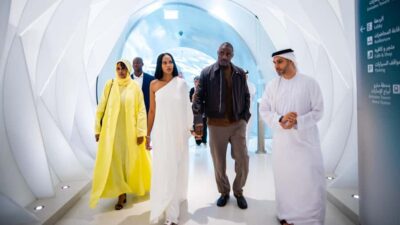
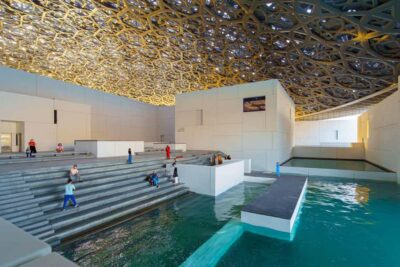
Abu Dhabi Grand Mosque & Louvre Museum Full-Day
Read our review →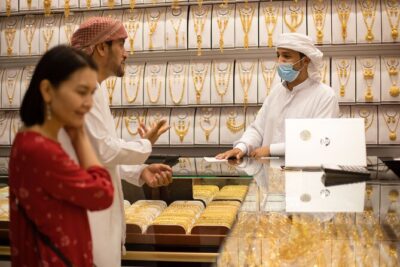
Dubai Aladdin Tour: Souks, Creek, Old Dubai and Tastings
Read our review →
Dubai Evening Heritage Safari by Vintage G Class Al Marmoom Oasis
Read our review →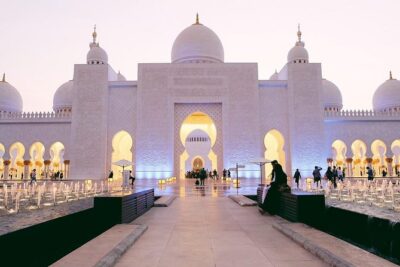
Abu Dhabi City Tour, Grand Mosque, Emirates Palace & The Louvre
Read our review →
Dubai Camel Desert Safari, Traditional Meal & Heritage Activities
Read our review →
Heritage Safari in Vintage Land Rover with Dinner
Read our review →
Old Dubai tour: Local Market, Tasting, Dubai creek with Abra ride
Read our review →Browse the lists this tour appears in